THE ETHIOPIA COMMODITY EXCHANGE (ECX) AND ETHIOPIAN COFFEE EXPORT
Understanding the Ethiopia Commodity Exchange and its critical role in Ethiopian coffee export
Dec 15, 2025
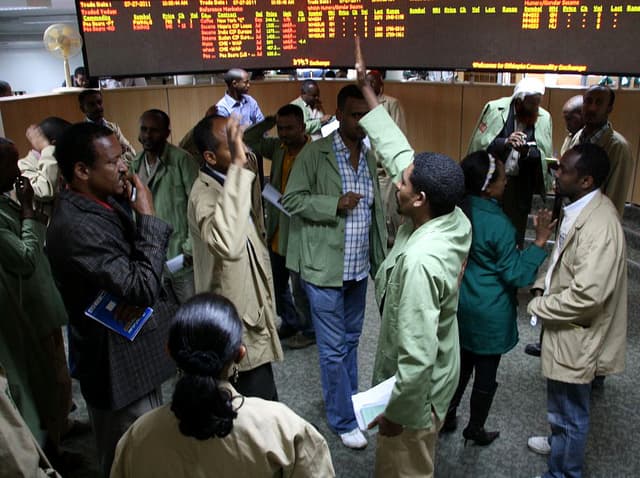
If you've ever tried to import Ethiopian coffee, you've likely encountered the Ethiopia Commodity Exchange (ECX). For international buyers, the ECX can seem like a mysterious black box a regulatory layer that adds complexity to sourcing. For Ethiopian exporters, it's the backbone of legitimacy, quality control, and market access.
This guide explains what the ECX actually is, how it works, why it matters for Ethiopian coffee export, and what importers need to know when sourcing from ECX-registered suppliers.
Key Takeaway: The ECX isn't just a regulatory hurdle it's a quality assurance and traceability system that protects both exporters and international buyers. Understanding how it works makes sourcing Ethiopian coffee significantly easier.
What is the Ethiopia Commodity Exchange (ECX)?
The Ethiopia Commodity Exchange (ECX) was established in 2008 as Africa's first commodity exchange, created to modernize Ethiopia's agricultural markets and address long-standing inefficiencies in the country's commodity trading system. Coffee is one of its primary commodities, alongside sesame, wheat, maize, and haricot beans.
Before the ECX, Ethiopian coffee markets suffered from:
- Price opacity: Farmers and buyers had no reliable market information, leading to exploitation
- Quality inconsistency: No standardized grading meant buyers couldn't trust what they were purchasing
- Limited traceability: Coffee moved through multiple middlemen, obscuring origin and quality
- Payment delays: Transactions could take weeks or months, creating cash flow problems for farmers
The ECX was designed to solve these problems by creating a centralized, transparent marketplace with standardized contracts, quality grading, electronic trading, and guaranteed payment clearing within 24 hours.
ECX by the Numbers
- Established: April 2008
- Headquarters: Addis Ababa, Ethiopia
- Coffee handled: Over 60% of Ethiopia's coffee export volume
- Trading centers: Multiple regional warehouses across coffee-growing regions
- Exporters registered: Hundreds of licensed coffee exporters
How the ECX Coffee Grading System Works
One of the ECX's most valuable contributions to Ethiopian coffee export is its standardized grading system. Every coffee lot that passes through the ECX is evaluated and assigned a grade based on physical defects and cup quality.
Ethiopian Coffee Grades
Grade 1 (G1) - Specialty
0-3 defects per 300g sample
The highest quality Ethiopian coffee. Clean cup, no defects, vibrant flavor. Typically scores 85+ on SCA cupping protocol. Speciality pricing.
Grade 2 (G2) - Specialty
4-12 defects per 300g sample
High-quality coffee with minimal defects. Still specialty-grade, excellent cup profile. Scores 83-85+ typically. Most common export grade for specialty market.
Grade 3 (G3) - Premium
13-25 defects per 300g sample
Good quality coffee suitable for premium commercial blends. Clean but may lack the complexity of G1/G2.
Grades 4 & 5 - Commercial
26-45 defects (G4), 46-100 defects (G5)
Commercial-grade coffee for mass-market products. Lower flavor complexity, more defects. Not typically exported for specialty market.
What Counts as a "Defect"?
The ECX uses the SCA (Specialty Coffee Association) defect classification system:
- Category 1 defects (full defects): Black beans, sour beans, fungus-damaged beans, foreign matter
- Category 2 defects (partial defects): Broken/chipped beans, insect damage, immature beans, withered beans, floaters
- 5 Category 2 defects = 1 full defect equivalent
The ECX Coffee Export Process: Step by Step
For international buyers, understanding how coffee moves through the ECX helps clarify timelines and documentation requirements.
- Farmers/Cooperatives deliver cherry to washing stations
Coffee is processed (washed, natural, honey) and dried. Parchment coffee is milled to remove outer layers, producing green beans. Learn more about coffee processing here.
- Coffee is delivered to ECX warehouses
Regional ECX facilities receive the coffee. Samples are taken for grading and cupping.
- ECX quality control evaluates and grades
Professional cuppers assess defect count, moisture content, bean size/density, and cup quality. Coffee is assigned a grade (G1-G5) and classified by origin region.
- Coffee is listed on ECX trading platform
Sellers list coffee lots with grade, origin, processing method, and quantity. Buyers (exporters, domestic roasters) can bid electronically.
- Licensed exporters purchase coffee lots
Exporters registered with the ECX and Ethiopian Coffee & Tea Authority can buy coffee for international sale. Payment clears within 24 hours.
- Coffee is prepared for export
Exporters arrange bagging (typically 60kg jute/GrainPro bags), documentation (ICO certificate, phytosanitary certificate, quality reports), and shipping logistics.
- Coffee ships from Djibouti port
Most Ethiopian coffee exports via Djibouti (FOB Djibouti). Some exporters use the Addis Ababa dry port for containerized shipments.
Timeline Note: From ECX purchase to container departure typically takes 2-4 weeks, depending on documentation, container availability, and logistics. Plan accordingly when ordering for seasonal programs.
ECX Traceability: What It Means for Buyers
One of the ongoing debates about the ECX has been around traceability. Initially, the ECX system anonymized coffee origins to prevent price manipulation and ensure fairness. Coffee was classified only by broad region (e.g., "Sidama") rather than specific washing station or cooperative.
This changed significantly in recent years. The Ethiopian government and ECX have introduced reforms allowing greater traceability, especially for specialty coffee:
- Direct Specialty License (DSL): Allows exporters to bypass ECX for direct farm/cooperative purchases with full traceability. Requires special licensing and is typically limited to specialty-grade coffee scoring 85+ points.
- Enhanced ECX traceability: Recent ECX reforms allow better origin documentation within the platform, especially for high-grade lots (G1/G2).
- Union/Cooperative branding: Cooperatives can now maintain identity and traceability through the ECX system in many cases.
For Importers: What to Ask About Traceability
When sourcing from an Ethiopian exporter, clarify:
- Is this ECX coffee or DSL (direct)? DSL offers farm/cooperative-level traceability
- What region and sub-region? Even ECX coffee can specify areas like "Yirgacheffe Kochere" vs just "Yirgacheffe"
- Washing station or cooperative name? Available for DSL and increasingly for ECX specialty lots
- Processing details? Fermentation time, drying method, etc.
- Cup score and cupping notes? Reputable exporters provide their own lab reports beyond ECX grading
Benefits of ECX for International Coffee Buyers
If you're an importer or roaster sourcing Ethiopian coffee, working with ECX-registered exporters offers significant advantages:
Quality Assurance
ECX grading provides standardized quality metrics. When you order G1 Yirgacheffe washed, you know exactly what defect count and cup profile to expect.
Legal Compliance
ECX-registered exporters have proper licensing, export permits, and documentation. Reduces risk of shipment holds at customs.
Price Transparency
ECX pricing is market-driven and transparent. You can verify that you're paying fair market rates for the grade and origin you're purchasing.
Documentation Ready
ECX coffee comes with quality certificates, origin documentation, ICO certificates, and phytosanitary certificates required for import.
Fraud Protection
The ECX system prevents common fraud issues you're dealing with vetted, licensed exporters who must maintain their registration.
Supply Chain Integrity
Coffee handled through ECX maintains chain of custody documentation from origin to export, providing accountability at every stage.
Common Misconceptions About the ECX
Myth: "ECX coffee has no traceability"
Reality: While early ECX systems limited traceability, reforms now allow much better origin documentation, especially for specialty lots. DSL (Direct Specialty License) provides full farm-level traceability outside ECX auction.
Myth: "All Ethiopian coffee must go through ECX"
Reality: Specialty coffee scoring 85+ can be exported via DSL with direct cooperative/farm sourcing. Estate-grown coffee from private farms can also bypass ECX. However, most commercial-volume coffee does go through ECX.
Myth: "ECX grades are all that matters for quality"
Reality: ECX grades (G1/G2/G3) measure defect count, not cup quality. A G2 with 86+ cupping score is better than a G1 with 83 score. Always ask for cupping reports, not just grade.
Myth: "ECX adds cost without value"
Reality: ECX fees are modest (typically <1% of transaction value). The quality assurance, documentation, payment clearing, and legal framework provide significant value that reduces risk and simplifies international trade.
How to Choose an ECX-Registered Ethiopian Coffee Exporter
Not all ECX-registered exporters are created equal. When evaluating potential suppliers, look for:
- Responsive communication: Can they answer emails promptly? Do they understand international buyer needs?
- Transparent documentation: Are they willing to share quality reports, cupping scores, and origin details?
- Sample programs: Do they offer sample sets so you can taste before committing to containers?
- Export experience: How long have they been exporting? Do they have references from other importers?
- Logistics capability: Can they handle FOB Djibouti? Do they work with freight forwarders?
- Traceability options: Do they offer both ECX and DSL sourcing? Can they provide washing station/cooperative details?
- Quality consistency: Can they supply the same profiles year after year for your blends?
Red Flags to Watch For: Exporters who can't provide ECX registration documentation, refuse to share cupping reports, have no sample program, or offer prices significantly below market rates. If it seems too good to be true, it probably is.
The Future of ECX and Ethiopian Coffee Export
The ECX continues to evolve. Recent and upcoming reforms include:
- Enhanced digital platform: Improved electronic trading, better data access for buyers
- Greater traceability options: Expanding ability to maintain origin identity through the system
- Direct trade expansion: Liberalizing DSL requirements to allow more direct farm-to-exporter relationships
- Regional warehouses: Expanding storage facilities closer to producing areas for faster processing
- Quality lab improvements: Investing in better cupping facilities and trained Q-graders
For international buyers, these reforms mean better access to traceable, high-quality Ethiopian coffee while maintaining the quality assurance and legal framework the ECX provides.
Ready to Source Ethiopian Coffee from an ECX-Registered Exporter?
At Ethio Coffee Export PLC, we're ECX-registered and licensed to export Ethiopian green coffee to importers worldwide. From Grade 1 Yirgacheffe to natural processed Sidamo, we offer full traceability, professional export documentation, quality reports, and the responsive communication international buyers need.
Whether you're sourcing for the first time or looking for a more reliable Ethiopian supplier, we understand the ECX system inside and out and we make the export process transparent and hassle-free.
Related Articles
Import Guides
About This Insight: This guide explains the Ethiopia Commodity Exchange (ECX) system, its role in Ethiopian coffee export, grading standards, traceability, and what international buyers need to know when sourcing from ECX-registered suppliers.