IMPORTING ETHIOPIAN COFFEE TO AUSTRALIA: COMPLETE BIOSECURITY & CUSTOMS GUIDE
Your comprehensive guide to importing specialty Ethiopian green coffee into Australia: navigating DAFF biosecurity requirements, Australian Border Force customs, FSANZ food safety standards, and entering one of the world's most sophisticated and quality-obsessed specialty coffee markets.
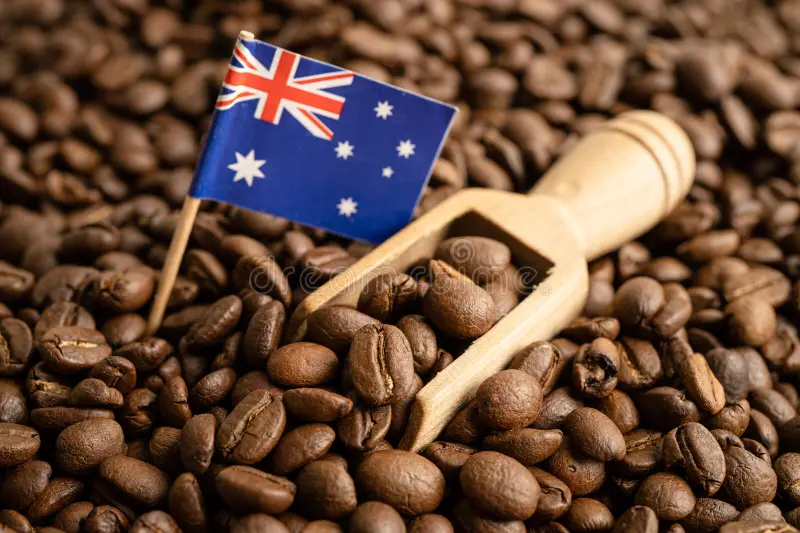
Jan 09, 2026
Australia boasts one of the world's most advanced and discerning specialty coffee cultures. From Melbourne's legendary laneway cafes to Sydney's harbourside roasteries, Brisbane's subtropical coffee scene to Perth's coastal specialty shops, Australians are renowned globally for their exceptional coffee standards and uncompromising quality expectations.
Ethiopian coffee, with its complex floral profiles, bright acidity, and distinctive terroir, has become a cornerstone of Australia's specialty coffee revolution. Australian roasters and consumers seek transparency, traceability, and exceptional quality – values that align perfectly with Ethiopian specialty coffee's strengths. The Australian market offers premium pricing for quality, sophisticated distribution infrastructure, and a consumer base educated about coffee origins and processing methods.
However, importing into Australia requires navigating the country's rigorous biosecurity regime – among the world's strictest due to Australia's unique ecosystem. The Department of Agriculture, Fisheries and Forestry (DAFF) enforces comprehensive quarantine controls, while the Australian Border Force (ABF) handles customs clearance. This guide provides everything Ethiopian exporters and Australian importers need to successfully navigate Australia's import system.
Australian Market Advantage: Australia offers zero import duty on coffee, world-class logistics infrastructure, premium pricing for specialty coffee (among highest globally), and a sophisticated consumer market that values Ethiopian coffee's unique characteristics. Success requires strict biosecurity compliance and understanding Australia's quality-focused coffee culture.
In This Guide
- 1. Why Australian Coffee Importers Choose Ethiopian Coffee
- 2. Understanding Australian Coffee Import Regulations
- 3. DAFF Biosecurity Requirements
- 4. Australian Border Force Customs Clearance
- 5. Import Duties, GST & Tax Structure
- 6. Required Import Documentation
- 7. Shipping Routes & Australian Port Logistics
- 8. Complete Cost Breakdown: FOB to Landed
- 9. Australian Business Registration & ABN
- 10. Australian Coffee Market Insights & Trends
- 11. Working with Ethiopian Coffee Exporters
- 12. Tips for Success in the Australian Market
1. Why Australian Coffee Importers Choose Ethiopian Coffee
Australia's coffee culture is world-renowned for its sophistication, quality obsession, and café lifestyle:
The Australian Coffee Phenomenon
Australian Coffee Market Statistics
- Market Size: AU$6+ billion coffee market (2024-2026)
- Consumption: 1.9+ billion cups consumed annually in Australia
- Cafes: 25,000+ cafes nationwide (highest per capita in developed world)
- Specialty Dominance: 75%+ of cafes serve specialty-grade coffee
- Demographics: 26 million population, highly urbanized (86%), affluent coffee consumers
- Spending: Average Australian spends AU$1,000+ annually on coffee (highest globally)
- Import Volume: 80,000+ tons of green coffee annually
- Quality Standards: Australian coffee culture sets global benchmarks for espresso quality
Why Ethiopian Coffee Excels in Australia
Consumer Drivers
- Flavor complexity appreciation: Australian palate highly educated, values bright acidity and floral notes
- Filter coffee culture: Batch brew, pour-over increasingly popular – perfect for Ethiopian coffee
- Origin storytelling: Consumers demand transparency and connection to origin
- Sustainability focus: Environmental and social responsibility critical to Australian consumers
- Natural processing popularity: Fruit-forward Ethiopian naturals highly sought after
Business Drivers
- Premium pricing: Australian consumers pay among world's highest prices for specialty coffee
- Competition differentiation: Ethiopian origins help roasters stand out in crowded market
- Espresso excellence: High-quality Ethiopian coffees work beautifully in milk-based drinks (Australia's forte)
- Retail growth: Retail coffee (beans, subscriptions) booming online and in stores
- Quality obsession: Australian market rewards quality with loyalty and premium prices
Australian Market Reality: Australia is arguably the world's most quality-focused coffee market. Consumers can distinguish quality instantly, cafes compete on excellence rather than price, and Ethiopian coffee's distinctive profiles align perfectly with Australian preferences. This is a premium market where quality is rewarded.
2. Understanding Australian Coffee Import Regulations
Coffee imports into Australia are regulated by multiple government agencies with distinct responsibilities:
Department of Agriculture, Fisheries and Forestry (DAFF)
Website: agriculture.gov.au
Responsibilities:
- • Biosecurity risk assessment and management
- • Import permits for plant products
- • Border inspection and quarantine
- • Pest and disease prevention
- • Phytosanitary certificate verification
- • Container fumigation requirements
Australian Border Force (ABF)
Website: abf.gov.au
Responsibilities:
- • Customs clearance processing
- • Import declaration verification
- • Tariff classification and duty collection
- • GST collection at border
- • Trade compliance enforcement
- • Integrated Cargo System (ICS) management
Food Standards Australia New Zealand (FSANZ)
Website: foodstandards.gov.au
Responsibilities:
- • Food safety standards development
- • Maximum residue limits (pesticides, contaminants)
- • Food labeling requirements
- • Import food safety compliance
Note: Green coffee is low-risk and doesn't require specific FSANZ import approvals beyond compliance with food safety standards.
The key to successful Australian import is understanding that biosecurity (DAFF) is the primary hurdle, not food safety. Australia's island ecosystem makes quarantine critically important.
3. DAFF Biosecurity Requirements
Australia's biosecurity system is among the world's strictest. All plant products, including coffee, are subject to rigorous controls:
DAFF Biosecurity Compliance for Coffee
Critical: Why Biosecurity Matters for Coffee
Australia is free from many coffee pests and diseases present elsewhere:
- • Coffee Berry Borer: Not present in Australia – major biosecurity risk
- • Coffee Leaf Rust: Not established in Australia
- • Other pests: Various beetles, fungi, and pathogens absent from Australia
- • Consequences: Non-compliance can result in container fumigation, destruction, or re-export at importer's expense
1Import Permit (Not Required for Green Coffee)
Good news: Green coffee beans (roasted or unroasted) do not require an import permit:
- No permit required: Coffee (HS code 0901) is a permitted import without permit
- However: Must still comply with all biosecurity conditions
- Inspect BICON: Check Biosecurity Import Conditions (BICON) database for specific requirements
2Phytosanitary Certificate Requirements
Ethiopian exporter must provide phytosanitary certificate:
- • Issuing Authority: Ethiopian Ministry of Agriculture or Ethiopian Coffee Authority
- • Content: Certificate must state coffee is free from quarantine pests and diseases
- • Treatment Declaration: If fumigated, certificate must specify treatment method, date, chemical
- • Validity: Certificate typically valid for 14-21 days from issue
- • Original Required: DAFF requires original phytosanitary certificate (not copy)
3Container and Packaging Requirements
DAFF has strict requirements for containers and packaging:
- • Container Cleanliness: Container must be clean, free from soil, plant material, pests
- • Wooden Pallets: Must comply with ISPM-15 (heat treatment or fumigation)
- • Jute/Hessian Bags: Acceptable for green coffee but must be clean and pest-free
- • Inspection Risk: DAFF may inspect containers upon arrival (random or targeted)
4Border Inspection Process
DAFF conducts biosecurity inspections at ports:
- • Document Check: Phytosanitary certificate verified first
- • Physical Inspection: Container may be opened for visual inspection (5-10% of shipments)
- • Sampling: DAFF may take samples for laboratory testing
- • Treatment: If pests found, container may require fumigation (importer pays)
- • Clearance Time: 1-3 days if no issues; longer if inspection or treatment required
- • Costs: Biosecurity inspection fee ~AU$180-350 depending on cargo type
Biosecurity Success Key: Work with Ethiopian exporters who understand Australian biosecurity requirements. Ensure phytosanitary certificates are correct, containers are clean, and packaging complies with ISPM-15. Most delays and costs arise from biosecurity issues, not customs clearance.
4. Australian Border Force Customs Clearance
After biosecurity clearance, cargo proceeds to ABF customs processing:
Integrated Cargo System (ICS)
Australia uses the Integrated Cargo System (ICS) for all import declarations:
- Electronic system: All customs declarations lodged online via ICS
- Customs brokers: Most importers use licensed customs brokers to handle declarations
- Risk-based assessment: ABF uses automated risk profiling
- Real-time processing: Declarations typically processed within hours
- Electronic payment: Duties and GST paid electronically
ABF Customs Requirements
| Requirement | Details |
|---|---|
| Australian Business Number (ABN) | Required for all importers (register at business.gov.au) |
| Tariff Classification | 0901.11.00 (Coffee, not roasted, not decaffeinated) or 0901.12.00 (decaffeinated) |
| Import Duty | 0% (Free - zero duty on coffee) |
| Goods and Services Tax (GST) | 10% on CIF value + duty (duty is zero, so 10% of CIF) |
| Import Declaration | Full import declaration via ICS (B650 for warehouse, N10 for home consumption) |
| Customs Broker | Licensed broker required (unless importer self-clears with ABF authorization) |
| Processing Time | 1-2 business days (after biosecurity clearance) |
GST and Input Tax Credits
While coffee imports are subject to 10% GST, registered businesses can claim this back:
- ✓ GST at Import: 10% GST charged on CIF value
- ✓ Input Tax Credit: GST-registered businesses claim this as input tax credit
- ✓ BAS Reporting: Claim on quarterly Business Activity Statement (BAS)
- ✓ Net Impact: For GST-registered businesses, the 10% GST is recoverable (temporary cash flow impact only)
5. Import Duties, GST & Tax Structure
Australia offers favorable duty treatment for coffee imports:
Australian Coffee Import Tax Structure
| Charge Type | Rate | Notes |
|---|---|---|
| Customs Duty | 0% (Free) | Zero duty on coffee (tariff code 0901) under WTO schedule |
| Goods and Services Tax (GST) | 10% | Applied on CIF value (recoverable for GST-registered businesses) |
| Biosecurity Inspection Fee | AU$180-350 | DAFF inspection fee (varies by cargo type) |
| Customs Broker Fee | AU$150-300 | Licensed broker service fee (negotiable) |
| Port Handling Charges | AU$400-800 | Terminal handling, documentation, short-term storage |
Understanding Australian GST for Coffee Importers
The 10% GST is charged at import but recoverable for GST-registered businesses:
- GST Registration: Businesses with turnover over AU$75,000 must register for GST
- Input Tax Credit: GST paid on imports claimed as input tax credit
- BAS Filing: Quarterly (or monthly for large businesses) Business Activity Statement
- Recovery Timeline: GST credited on next BAS lodgment (typically quarterly)
- Cash Flow: Temporary cash flow impact until next BAS refund
Result: For GST-registered businesses, the 10% GST is not a true cost, only a temporary cash flow consideration.
Australian Tax Advantage: Zero customs duty on coffee makes Australia highly competitive. The 10% GST is recoverable for registered businesses, meaning your true landed cost is FOB price + logistics costs only (plus temporary GST cash flow impact).
6. Required Import Documentation
Comprehensive documentation is critical for Australian biosecurity and customs clearance:
From Ethiopian Exporter (Critical)
- • Phytosanitary Certificate: Original certificate from Ethiopian Ministry of Agriculture/Coffee Authority (CRITICAL for DAFF)
- • Commercial Invoice: FOB value, product description, tariff code, exporter/importer details
- • Packing List: Detailed breakdown of bags, weights (net/gross), container seal numbers
- • Certificate of Origin: From Ethiopian Chamber of Commerce
- • Quality Certificate: ECX grade certificate or cupping report
- • Fumigation Certificate: If wooden pallets used, must show ISPM-15 compliance
- • Bill of Lading: Ocean B/L showing shipment details
From Shipping Company/Freight Forwarder
- • Bill of Lading (B/L): Original or telex release B/L
- • Arrival Notice: Notification of vessel arrival at Australian port
- • Delivery Order: Authorization to release cargo
- • Container Packing Declaration: Container condition and seal information
Australian Documentation (Importer/Broker)
- • Australian Business Number (ABN): Your ABN for customs clearance
- • Import Declaration: Lodged via ICS by customs broker
- • GST Registration: Evidence of GST registration if claiming input tax credit
- • Food Business Registration: State/territory food business license (requirements vary)
Documentation Errors That Cause Delays
- Missing or incorrect phytosanitary certificate – #1 cause of delays and container holds
- Phytosanitary certificate not in original form (DAFF requires original, not copy)
- Container seal numbers not matching between documents
- Incorrect tariff classification or HS code
- Invoice value discrepancies between commercial invoice and B/L
- Incomplete product description (must specify green coffee, grade, processing method)
7. Shipping Routes & Australian Port Logistics
Ethiopian coffee reaches Australia through four major container ports:
Port of Melbourne
Australia's largest container port
- • Position: Australia's busiest port (40% of container trade)
- • Location: Victoria, serves Melbourne's massive coffee scene
- • Coffee Volume: Handles ~45% of Australia's coffee imports
- • Advantages: Excellent infrastructure, proximity to Melbourne roasters (coffee capital)
- • Free Storage: 5 days typically
Port Botany (Sydney)
NSW's primary container port
- • Position: Australia's 2nd largest container port
- • Location: Sydney, serves NSW and ACT
- • Coffee Volume: ~30% of Australia's coffee imports
- • Advantages: Sydney's growing specialty scene, proximity to roasters
- • Free Storage: 5 days
Port of Brisbane
Queensland's major gateway
- • Position: Australia's 3rd largest container port
- • Location: Queensland, serves Brisbane and regional QLD
- • Advantages: Growing specialty coffee market, subtropical climate
- • Free Storage: 5 days
Port of Fremantle (Perth)
Western Australia's primary port
- • Position: Western Australia's only major container port
- • Location: Perth, serves WA
- • Advantages: Closest Australian port to Africa/Middle East
- • Free Storage: 5 days
Shipping Route: Ethiopia to Australia
Typical Shipping Timeline
- 1. Addis Ababa → Djibouti Port: 2-4 days
Road/rail transport to Port of Djibouti - 2. Djibouti → Suez Canal: 5-7 days
Red Sea route via Bab-el-Mandeb - 3. Suez Canal → Indian Ocean: 1-2 days
Through Suez, down Red Sea - 4. Indian Ocean → Australia: 14-18 days
Across Indian Ocean, via Sri Lanka/Singapore (depending on route) - 5. Australian Port Handling & Clearance: 3-5 days
Unloading, biosecurity inspection, customs clearance, delivery
Total Transit Time: 25-36 days door-to-door (Ethiopia → Australian warehouse)
Ocean Freight Costs
| Container Size | Capacity | Freight Cost (Djibouti → Melbourne/Sydney) |
|---|---|---|
| 20ft Container | 18-20 MT (~39,600-44,000 lbs) | US$3,500-5,500 |
| 40ft Container | 26-28 MT (~57,000-62,000 lbs) | US$5,500-7,500 |
Note: Freight rates to Australia fluctuate based on season, fuel surcharges, and market demand. Australia-bound freight typically lower than Europe/Americas due to backhaul dynamics. Always request current quotes.
8. Complete Cost Breakdown: FOB to Landed
Here's a realistic cost analysis for importing Ethiopian specialty coffee to Australia:
Sample Import Cost: 20ft Container to Melbourne
Container Specifications:
- • Container: 20ft Standard
- • Net Weight: 18,000 kg (39,683 lbs / 18 MT)
- • Coffee Grade: Ethiopian Specialty G1 Washed Yirgacheffe
- • FOB Price: $4.80/lb ($10.58/kg)
| Cost Item | Amount (USD) | Per lb |
|---|---|---|
| FOB Price (Ethiopia) | $190,478 | $4.80 |
| Freight & Insurance | ||
| Ocean Freight (Djibouti → Melbourne) | $4,500 | $0.11 |
| Marine Insurance (0.3% CIF) | $586 | $0.01 |
| CIF Value (Melbourne) | $195,564 | $4.93 |
| Australian Import Taxes | ||
| Customs Duty (0%) | $0 | $0.00 |
| GST 10% (on CIF) | $19,556 | $0.49 |
| Port & Clearance Fees | ||
| Terminal Handling Charges (THC) | $380 | $0.01 |
| DAFF Biosecurity Inspection Fee | $250 | $0.01 |
| Documentation & D/O Fees | $120 | $0.00 |
| Customs Broker Fee | $200 | $0.01 |
| Container Transport (Port → Warehouse) | $250 | $0.01 |
| TOTAL LANDED COST | $216,320 | $5.45 |
| GST Recovery (for GST-registered business) | -$19,556 | -$0.49 |
| NET COST (after GST recovery) | $196,764 | $4.96 |
Cost Summary:
- • FOB Ethiopia: $4.80/lb
- • Landed Cost (before GST recovery): $5.45/lb (+13.5% markup)
- • Net Cost (after GST recovery): $4.96/lb (+3.3% markup)
- • Logistics Cost: $0.16/lb (freight, insurance, fees)
Australian Cost Reality: For GST-registered businesses, Australian landed costs are highly competitive – only ~3-4% above FOB price. Zero customs duty and lower freight rates to Australia make it one of the most cost-effective premium specialty markets globally.
9. Australian Business Registration & ABN
To import coffee into Australia, you need proper business registration:
Company (Pty Ltd)
Most common structure for importers
- Registration: Register with ASIC (Australian Securities & Investments Commission)
- Cost: AU$506 (ASIC registration fee)
- Timeline: 1-3 business days
- Liability: Limited liability protection
- Taxation: Company tax 25-30%
- Best For: Serious importers, scalable operations
Sole Trader
Simplest structure for small operations
- Registration: Register ABN online (business.gov.au)
- Cost: Free
- Timeline: Immediate
- Liability: Unlimited personal liability
- Taxation: Personal income tax rates
- Best For: Small roasters, individual importers
Essential Registrations for Australian Coffee Importers
- Australian Business Number (ABN): Apply at business.gov.au (free, instant for most applicants)
- Company Registration (if applicable): Register Pty Ltd with ASIC (asic.gov.au)
- GST Registration: Register for GST if turnover exceeds AU$75,000 (mandatory threshold)
- Food Business Registration: Register with state/territory health authority (requirements vary by state)
- Import/Export Registration: Register with ABF if self-clearing (most use customs brokers)
- Business Bank Account: Open Australian business bank account
Foreign Companies Importing to Australia:
Non-Australian businesses can import through:
- • Australian Subsidiary: Establish Australian Pty Ltd (recommended for regular imports)
- • Branch Registration: Register foreign company branch in Australia
- • Local Importer Partner: Work with established Australian importer (simplest initially)
- • Direct Import: Foreign companies can import directly if they obtain ABN and comply with all requirements
10. Australian Coffee Market Insights & Trends
Understanding Australian coffee culture is essential – it's unique globally:
Key Australian Coffee Market Trends (2024-2026)
Espresso Excellence as Standard
Australians expect world-class espresso as baseline, not premium. Ethiopian coffees must perform excellently in milk-based drinks (flat white, latte) – this is where Australian baristas shine.
Filter Coffee Growth
While espresso dominates, filter coffee (batch brew, pour-over) growing rapidly in specialty cafes. Perfect for showcasing Ethiopian coffee's nuanced flavors.
Melbourne: Global Coffee Capital
Melbourne arguably world's most sophisticated coffee city. Sets global trends, influences international markets. Success in Melbourne signals quality recognition worldwide.
Cafe Culture as Lifestyle
Coffee is social fabric of Australian urban life. Cafes are community hubs, third spaces, essential daily ritual. This drives consistent, high-volume quality coffee consumption.
Origin Transparency & Ethics
Australian consumers highly value transparency, farmer relationships, sustainability. Ethiopian coffee's traceable supply chains and cooperative models resonate strongly.
Notable Australian Specialty Roasters Using Ethiopian Coffee
Leading Australian roasters championing Ethiopian origins:
- • Market Lane Coffee (Melbourne)
- • Proud Mary Coffee (Melbourne)
- • Seven Seeds Coffee Roasters (Melbourne)
- • ST. ALi Coffee Roasters (Melbourne)
- • Industry Beans (Melbourne)
- • Single O (Sydney)
- • Toby's Estate (Sydney)
- • Campos Coffee (Sydney)
- • Ona Coffee (Canberra)
- • Blacklist Coffee Roasters (Brisbane)
11. Working with Ethiopian Coffee Exporters
For Australian importers, choosing the right Ethiopian export partner is crucial:
What Australian Importers Should Look For
- Biosecurity Understanding: Critical – exporter must understand Australian phytosanitary requirements
- Phytosanitary Certificate Capability: Can provide correct, original certificates from authorized bodies
- Container Cleanliness: Understands Australian requirements for clean containers, ISPM-15 compliance
- Quality Consistency: Established QC, cupping protocols meeting Australian standards
- Transparency: Farm-level traceability (critical for Australian market)
- Sample Program: Pre-shipment samples for Australian approval
- Communication: English proficiency, Australian time zone compatibility
- Flexible Terms: Payment options, smaller order consolidation
Partner with Ethio Coffee Export for Australian Market
Ethio Coffee Export understands Australian biosecurity requirements and serves the Australian specialty market:
- Complete Australian documentation including phytosanitary certificates from authorized Ethiopian bodies
- Experience with DAFF biosecurity compliance and clean container protocols
- Specialty-grade Ethiopian coffee meeting Australian quality standards
- Pre-shipment sample program for Australian roasters
- Container consolidation options for smaller orders
- English communication and Australian time zone compatibility
- Transparent pricing, farm-level traceability, sustainability documentation
- Established shipping routes to Melbourne, Sydney, Brisbane
Contact us to discuss sourcing Ethiopian specialty coffee for the Australian market.
12. Tips for Success in the Australian Market
Biosecurity is Non-Negotiable
Triple-check phytosanitary certificates, ensure containers are clean, verify ISPM-15 compliance for wooden pallets. Biosecurity failures cause expensive delays, fumigation, or destruction. Work only with exporters who understand Australian requirements.
Use Experienced Customs Brokers
Licensed customs brokers handle both ABF customs and DAFF biosecurity coordination. Their AU$150-300 fee is excellent value for smooth clearance, especially for first-time importers.
Quality Standards are Extremely High
Australian consumers and cafes can instantly identify quality issues. Don't compromise on quality – Australian market rewards excellence and punishes mediocrity. Ethiopian specialty grade only.
Melbourne First, Then Expand
Melbourne is Australia's coffee capital and quality benchmark. Success in Melbourne validates your coffee and opens doors nationally. Sydney, Brisbane, Adelaide, Perth follow Melbourne's lead.
Plan Around Ethiopian Harvest
Ethiopian harvest (October-February) means freshest coffee arrives Australia March-May. Australians highly value fresh crop. Plan annual buying to maintain freshness year-round.
Espresso Performance is Critical
While Ethiopian coffee's complexity shines in filter, it must also perform excellently in milk-based espresso drinks. Australian cafes live on flat whites and lattes. Ensure your Ethiopian coffee works beautifully in milk.
Conclusion: Australia – The World's Most Quality-Obsessed Coffee Market
Australia represents the pinnacle of global specialty coffee culture. With the world's highest per-capita coffee consumption of quality coffee, uncompromising standards, sophisticated consumers, and premium pricing, Australia rewards excellence like no other market. Ethiopian specialty coffee, with its distinctive profiles and transparent supply chains, aligns perfectly with Australian values.
Success in the Australian market requires two things: exceptional quality and rigorous biosecurity compliance. Australian consumers and cafes can instantly identify great coffee – quality opens doors and builds loyal followings. But biosecurity compliance is non-negotiable: DAFF's requirements exist to protect Australia's unique ecosystem and must be respected absolutely.
For Ethiopian exporters and Australian importers who understand these requirements, Australia offers extraordinary opportunities: zero customs duty, recoverable GST, premium pricing, sophisticated distribution, and a consumer market that genuinely appreciates Ethiopian coffee's unique characteristics. This is where quality is celebrated and rewarded.
Key Takeaways
- Zero customs duty on coffee (AU saves money vs many markets)
- 10% GST recoverable for registered businesses (input tax credit)
- Phytosanitary certificate mandatory – must be original from authorized body
- DAFF biosecurity is critical – strict quarantine controls for clean containers
- Melbourne & Sydney are primary coffee import ports
- Transit time: 25-36 days Ethiopia to Australian warehouse
- Landed cost ~3-4% above FOB (after GST recovery)
- Quality standards extremely high – Australian consumers spot quality instantly
- Premium market – highest per-capita specialty coffee spending globally
Related Articles
- → Importing Ethiopian Coffee to Japan: Complete Market Entry Guide
- → Importing Ethiopian Coffee to South Korea: Complete Market Guide
- → Importing Ethiopian Coffee to UK: Complete Post-Brexit Guide
- → How to Import Ethiopian Specialty Coffee to the United States
- → Sourcing Green Coffee from Ethiopia: Complete Guide
- → Green Coffee Quality Control: Defects, Grading & What Importers Should Inspect