THE STORY BEHIND RISING ETHIOPIAN COFFEE PRICES: COMPREHENSIVE MARKET ANALYSIS
A comprehensive analysis of why Ethiopian coffee prices are rising, what's driving the global specialty coffee market upward, and what importers and roasters need to know about sourcing Ethiopian green coffee in 2026.
Jan 22, 2026
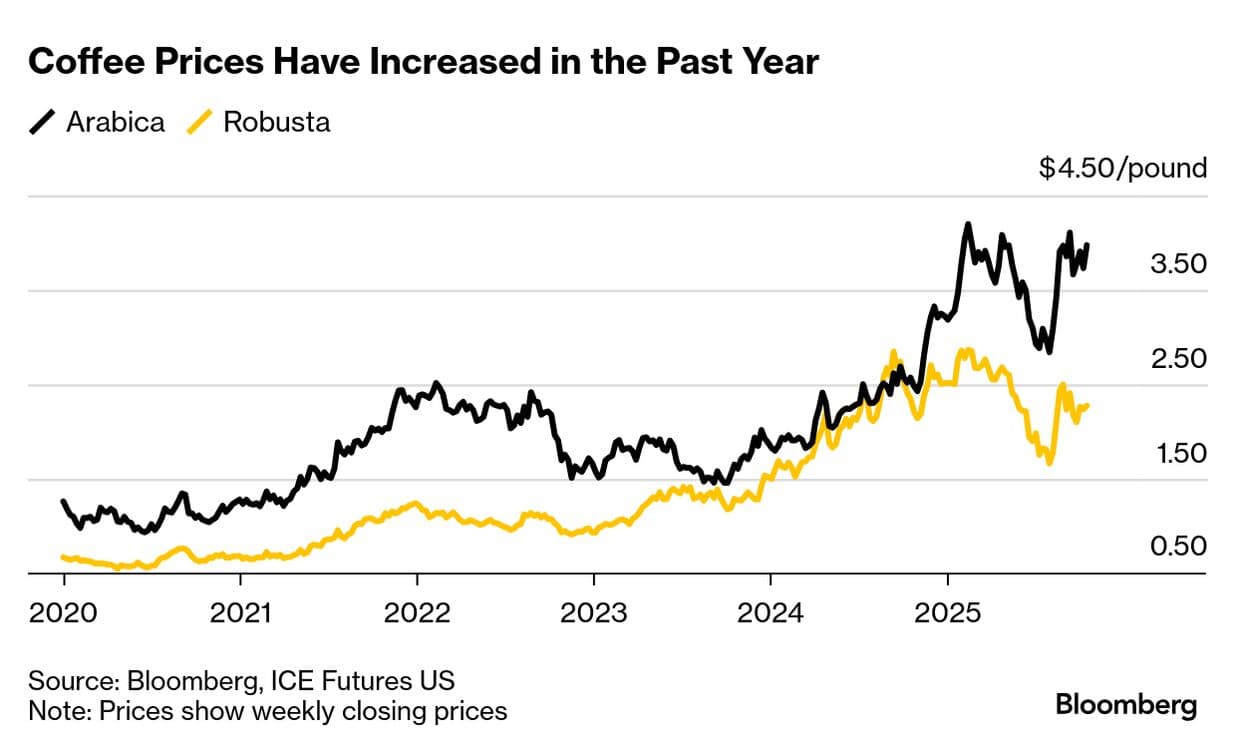
If you've been sourcing Ethiopian specialty coffee recently, you've likely noticed something significant: prices are rising. And they're not just creeping up-they're climbing at rates not seen in years. In early 2026, Arabica coffee futures have reached levels that are making headlines worldwide, and Ethiopian coffee, already prized for its exceptional quality, is commanding premium prices that reflect both global market forces and unique local factors.
For importers, roasters, and coffee businesses worldwide, understanding why Ethiopian coffee prices are increasing isn't just about budgeting-it's about strategic planning, supplier relationships, and maintaining quality while navigating an increasingly volatile market.
Current Market Reality (Early 2026): Arabica coffee futures are trading at 348.75 cents per pound (March 2026 contract), representing significant increases from previous years. Ethiopian specialty-grade coffees (G1 and G2) are commanding premiums of $1.50-$3.00+ per pound above the C-market, reflecting both quality and scarcity.
This comprehensive guide explores the complex story behind rising Ethiopian coffee prices, examining global market dynamics, local factors in Ethiopia, currency impacts, climate challenges, and what it all means for the future of specialty coffee sourcing.
In This Analysis
- 1. The Global Coffee Price Surge: Understanding the Big Picture
- 2. Brazil's Production Crisis and Its Ripple Effect
- 3. Climate Change: The Long-Term Price Driver
- 4. Ethiopian Birr Devaluation and Export Pricing
- 5. Rising Production and Export Costs in Ethiopia
- 6. The Quality Premium: Why Specialty Coffee Costs More
- 7. ECX Market Dynamics and Price Transparency
- 8. Global Shipping and Logistics Costs
- 9. Growing Global Demand for Ethiopian Coffee
- 10. Price Forecasts: What to Expect in 2026-2027
- 11. Strategic Recommendations for Importers and Roasters
- 12. Long-Term Outlook: The Future of Ethiopian Coffee Pricing
1. The Global Coffee Price Surge: Understanding the Big Picture
Ethiopian coffee prices don't exist in a vacuum. To understand what's happening with Ethiopian specialty coffee, we first need to understand the broader global coffee market crisis unfolding in 2024-2026.
The C-Market: Coffee's Global Price Benchmark
The "C-market" (ICE Arabica coffee futures traded on the New York Intercontinental Exchange) serves as the global benchmark for Arabica coffee pricing. While specialty coffee trades at premiums above this baseline, C-market movements affect all coffee prices worldwide.
Historic Price Levels in 2026
As of early 2026, Arabica coffee futures are trading at approximately 348 cents per pound-levels not consistently seen since the early 2010s. This represents increases of over 80-100% compared to 2020-2021 levels.
For context: Between 2015-2020, the C-market averaged 110-150 cents per pound. The current prices represent a fundamental shift in coffee economics globally.
What's Driving Global Coffee Prices Up?
Supply Shortages
Multiple major producing countries-Brazil, Vietnam, Colombia-have experienced production shortfalls due to drought, frost, and disease. Global coffee stocks have declined to concerning levels.
Climate Volatility
Extreme weather events are becoming more frequent. El Niño patterns, droughts, and unpredictable rainfall have disrupted production cycles across the coffee belt.
Robusta Crisis
Vietnam's Robusta production has suffered severe drought, pushing Robusta prices to record highs (over $4,000/ton in early 2026). This creates pressure across all coffee categories as buyers seek alternatives.
Speculative Investment
Financial speculators have entered coffee futures markets heavily, amplifying price movements. Fund positions in coffee futures have reached near-record levels.
2. Brazil's Production Crisis and Its Ripple Effect
Brazil produces approximately 35-40% of the world's coffee, making it the single most influential player in global coffee markets. When Brazil sneezes, the entire coffee world catches a cold-and Brazil has been battling serious production challenges.
The Brazilian Coffee Crisis (2021-2026)
Key Events in Brazil's Production Decline:
- 2021:Severe frost hits Brazilian coffee regions, damaging or destroying millions of coffee trees. The worst frost event in decades.
- 2022-2024:Extended drought periods reduce yields. Coffee trees stressed by frost never fully recover.
- 2025:Off-cycle year (Arabica produces biennially) coincides with continued weather challenges, resulting in significantly reduced harvest.
- 2026:While an "on-cycle" year, production remains below historical averages. Tree renewal takes 3-5 years to reach full productivity.
Impact on Ethiopian Coffee: When Brazil's output declines, global buyers turn to other origins for supply. Ethiopia, as one of the world's premier specialty Arabica producers, becomes more sought-after. Increased demand + limited supply = higher prices.
Market Dynamics: Ethiopia produces approximately 400,000-500,000 metric tons of coffee annually (roughly 6.6-8.3 million bags). While significant, this is only about 4-5% of global production. When Brazilian supply drops by even 5-10 million bags, the pressure on alternative origins like Ethiopia intensifies dramatically.
3. Climate Change: The Long-Term Price Driver
While market forces create short-term volatility, climate change represents the most significant long-term threat to coffee production-and the most persistent driver of rising prices.
Climate Change Impacts on Coffee Production
Temperature Increases
Arabica coffee thrives at 15-24°C. Rising temperatures push viable growing zones higher in altitude.
Impact: By 2050, up to 50% of current Arabica-suitable land may become unsuitable for production.
Rainfall Disruption
Changing precipitation patterns create droughts during critical growth periods and excessive rain during harvest.
Impact: Unpredictable yields, quality inconsistencies, increased cherry loss.
Disease Expansion
Coffee Leaf Rust (la roya) and Coffee Berry Disease thrive in warmer, wetter conditions.
Impact: Increased crop losses, higher input costs for disease management, tree mortality.
Extreme Weather Events
More frequent droughts, floods, frosts, and storms damage crops and infrastructure.
Impact: Harvest losses, damaged trees requiring years to recover, unpredictable supply.
Climate Impacts Specific to Ethiopia
Ethiopia is particularly vulnerable to climate change despite being coffee's ancestral home:
- Highland Dependence: Ethiopian coffee grows at 1,500-2,200+ meters. There's limited "higher ground" available as temperatures rise.
- Rainfall Variability: Recent years have seen erratic rainfall-severe droughts followed by intense rains-disrupting traditional production cycles.
- Smallholder Vulnerability: Over 90% of Ethiopian coffee is produced by smallholder farmers with limited resources to adapt to climate challenges.
- Wild Coffee Forests: Ethiopia's unique wild coffee populations face existential threats from temperature increases.
Long-Term Price Implication: Climate change isn't a temporary challenge-it's a structural shift reducing global coffee supply while demand continues growing. This fundamental supply-demand imbalance suggests that higher prices aren't a temporary spike but a "new normal" for the coffee industry.
4. Ethiopian Birr Devaluation and Export Pricing
Currency dynamics play a crucial-and often misunderstood-role in Ethiopian coffee pricing. While the global C-market trades in US dollars, Ethiopian producers and exporters operate in Ethiopian Birr (ETB), creating complex pricing dynamics.
Understanding the Birr Devaluation
Ethiopia has experienced significant currency devaluation in recent years, particularly accelerating in 2023-2025. The Ethiopian Birr has weakened substantially against the US dollar, moving from official rates around 50-55 ETB/USD in 2021 to significantly higher levels in 2024-2026.
How Currency Devaluation Affects Coffee Prices
For Ethiopian Exporters (Positive Effect)
When the Birr weakens, Ethiopian exporters receive more Birr for each US dollar earned from exports. This can make exporting more profitable in local currency terms, even if dollar prices remain stable.
For Coffee Farmers (Mixed Effect)
Farmers' production costs (labor, local inputs) are in Birr. If export revenues increase in Birr terms, farmers can potentially receive higher local prices. However, imported inputs (fertilizers, equipment) become more expensive.
For International Buyers (Negative Effect)
Devaluation doesn't always translate to lower dollar prices for buyers. In fact, Ethiopian sellers often maintain or increase dollar prices to preserve their purchasing power domestically and offset rising local costs.
The Complexity: Why Devaluation Doesn't Lower Export Prices
Many international buyers assume that Birr devaluation should make Ethiopian coffee cheaper in dollar terms. However, the reality is more nuanced:
- Inflation Offset: Devaluation typically accompanies or causes domestic inflation. While exporters earn more Birr per dollar, their costs (wages, transport, utilities, imported inputs) also rise in Birr terms.
- Global Market Pricing: Ethiopian specialty coffee is priced relative to global market levels. When the C-market is high (as in 2026), Ethiopian exporters maintain competitive pricing rather than undercutting the market.
- Quality Premium Protection: Ethiopian specialty coffees command quality premiums. Exporters are reluctant to sacrifice these premiums even when currency dynamics might allow lower pricing.
- Government Policy: Ethiopia's coffee export policies, ECX regulations, and minimum price mechanisms can limit how much prices can be reduced.
Practical Implication for Importers: Don't expect Birr devaluation to result in bargain prices for Ethiopian coffee. Instead, view it as a stabilizing factor that allows Ethiopian producers to maintain operations despite challenging economic conditions. The focus should remain on value, quality, and building sustainable partnerships rather than hunting for currency-arbitrage opportunities.
5. Rising Production and Export Costs in Ethiopia
Beyond global market forces and currency fluctuations, actual production and export costs in Ethiopia have increased substantially, contributing directly to higher coffee prices.
Breakdown of Cost Increases
Labor Costs
Coffee harvesting is labor-intensive, requiring skilled hand-picking of ripe cherries. Ethiopian agricultural wages have risen significantly in recent years due to inflation, urbanization, and labor shortages during peak harvest.
Estimated increase: 30-50% over 2021-2026 period
Fertilizer and Input Costs
Global fertilizer prices surged in 2021-2023 due to supply chain disruptions, energy costs, and geopolitical factors. Ethiopian farmers depend on imported fertilizers, making them vulnerable to global price shocks.
Estimated increase: 100-200% for key fertilizers compared to pre-2021 levels
Energy and Fuel Costs
Processing coffee requires energy (for washing, drying, milling). Transportation from farms to washing stations to export warehouses requires fuel. Both have seen dramatic price increases.
Estimated increase: 50-80% over 2021-2026
Processing Infrastructure Costs
Building or maintaining washing stations, drying beds, and storage facilities requires capital investment. Construction materials, equipment, and maintenance have all become more expensive.
Estimated increase: 40-60% for infrastructure investments
Internal Transportation and Logistics
Moving coffee from farms to processing sites, then to Addis Ababa or Djibouti for export involves trucking across challenging terrain. Fuel costs, vehicle maintenance, and driver wages have all increased.
Estimated increase: 50-70% over 2021-2026
ECX Fees and Administrative Costs
All Ethiopian coffee exports go through the Ethiopia Commodity Exchange (ECX) system, which involves testing fees, storage fees, auction fees, and administrative costs that have adjusted upward with inflation.
Estimated increase: 20-30% over 2021-2026
Packaging and Export Documentation
Coffee bags, labels, pallets, export documentation, quality testing, and certification all have costs that have risen with global inflation and supply chain pressures.
Estimated increase: 30-40% over 2021-2026
Cumulative Cost Impact
When you aggregate all these cost increases, Ethiopian coffee exporters are facing 40-70% higher costs of operation compared to 2020-2021 baseline levels. These costs must be recovered through export prices to maintain viable business operations.
This is not price gouging or opportunism-it's economic reality. Ethiopian exporters operate on relatively thin margins, and cost increases must be passed through the supply chain.
6. The Quality Premium: Why Specialty Coffee Costs More
Ethiopian coffee, particularly specialty-grade G1 and G2 washed and natural coffees, commands substantial premiums above commodity coffee. Understanding these premiums is essential to understanding Ethiopian coffee pricing.
What Justifies the Specialty Premium?
Exceptional Cup Quality
Ethiopian specialty coffees score 85-92+ points on the SCA scale, featuring complex flavor profiles (floral, fruity, tea-like characteristics) unmatched by other origins. This quality is the result of unique genetics, terroir, and processing expertise.
Selective Harvesting
Specialty coffee requires multiple selective passes through coffee farms, picking only ripe cherries. This is far more labor-intensive and costly than strip-picking all cherries at once (common for commercial coffee).
Meticulous Processing
Specialty processing requires careful cherry sorting, controlled fermentation, precise drying management (avoiding over-drying or under-drying), and rigorous quality control at every stage. Many Ethiopian specialty lots are hand-sorted multiple times.
Traceability and Transparency
Specialty buyers demand traceable coffee from specific regions, farms, or cooperatives. Maintaining this traceability requires additional documentation, quality systems, and direct relationships that add cost but provide value.
Limited Availability
Top-grade Ethiopian coffees represent a small percentage of total production. Yirgacheffe G1 natural, for example, might be only 5-10% of a region's total output. Scarcity drives premium pricing.
Specialty Premiums in the Current Market
In early 2026, Ethiopian specialty coffee typically trades at the following premiums above the C-market (which is around 340-350 cents/lb):
| Coffee Grade & Type | Premium Above C-Market | Approximate FOB Price Range |
|---|---|---|
| Yirgacheffe G1 Washed | $2.50-$3.50/lb | $6.00-$7.00/lb |
| Yirgacheffe G2 Washed | $2.00-$2.80/lb | $5.50-$6.30/lb |
| Sidamo/Guji G1 Natural | $2.20-$3.00/lb | $5.70-$6.50/lb |
| Sidamo/Guji G2 Natural | $1.80-$2.50/lb | $5.30-$6.00/lb |
| Harrar G3-G4 | $1.50-$2.20/lb | $4.90-$5.70/lb |
| Commercial Grade G4-G5 | $0.80-$1.50/lb | $4.20-$5.00/lb |
Note: FOB (Free on Board) prices are approximate and vary based on specific lots, timing, and market conditions. These represent 2026 market snapshots.
Key Insight: The specialty premium isn't inflated or artificial-it reflects real value creation through quality, traceability, and sustainability. When you pay $6.50/lb FOB for Ethiopian G1 washed coffee versus $4.50/lb for commercial grade, you're paying for measurably superior quality that your customers will taste in the cup.
7. ECX Market Dynamics and Price Transparency
The Ethiopia Commodity Exchange (ECX) plays a unique role in Ethiopian coffee pricing that international buyers must understand.
How ECX Affects Coffee Prices
All Ethiopian coffee exports (with limited exceptions for direct specialty trade license holders) must go through the ECX system. This centralized trading platform:
- Establishes baseline prices through daily auctions where coffee is bought and sold
- Provides price discovery based on supply and demand within Ethiopia
- Adds transaction costs (testing fees, storage, auction commissions)
- Creates price floors through minimum pricing mechanisms that prevent prices from falling too low
- Standardizes grading using the Ethiopian grading system (G1-G5)
ECX Price Dynamics in a Rising Market
When global coffee prices rise (as in 2024-2026), ECX auction prices typically follow-but not always immediately or proportionally. This creates interesting dynamics:
Domestic Demand Competition
Ethiopia has significant domestic coffee consumption (roughly 50% of production). Domestic buyers compete with exporters at ECX auctions, which can drive auction prices up, especially for lower grades popular domestically.
Export Opportunity Cost
Exporters won't bid on ECX coffee unless they can sell it internationally at a profit. When international prices are high, exporters bid more aggressively at ECX, pushing domestic prices up.
Price Transmission Delays
There can be a lag between international price movements and ECX price adjustments as market participants adjust their expectations and strategies.
For more detailed information about how ECX works and its impact on Ethiopian coffee exports, see our comprehensive guide: Understanding the Ethiopia Commodity Exchange (ECX).
8. Global Shipping and Logistics Costs
While coffee FOB (Free on Board) prices represent the cost at the Ethiopian port, international shipping costs have added significantly to landed costs for importers worldwide.
The Global Shipping Crisis (2020-2026)
Shipping Cost Increases:
- • Container shipping costs from Djibouti to major ports (Rotterdam, Hamburg, New York, Long Beach) increased 200-400% during 2020-2022 compared to pre-pandemic levels
- • While rates have moderated somewhat in 2024-2026, they remain 50-150% above 2019 levels
- • Container availability challenges in Djibouti and other African ports create delays and booking difficulties
- • Insurance costs have risen due to increased cargo values and geopolitical risks (Red Sea tensions, etc.)
Impact on Ethiopian Coffee Landed Costs
Example cost breakdown for 20ft container (~300 bags of 60kg each = 18,000kg) of Ethiopian coffee to USA:
| Cost Component | 2019 (Pre-Crisis) | 2026 (Current) | Increase |
|---|---|---|---|
| Ocean Freight (Djibouti-US Port) | $2,500 | $4,500-$6,000 | +80-140% |
| Djibouti Port Charges | $400 | $600-$700 | +50-75% |
| Destination Port Charges | $600 | $800-$1,000 | +33-67% |
| Customs Clearance & Documentation | $300 | $400-$500 | +33-67% |
| Insurance | $400 | $600-$800 | +50-100% |
| Total Logistics Cost | $4,200 | $6,900-$9,000 | +64-114% |
| Per-Pound Impact | $0.11/lb | $0.17-$0.23/lb | +$0.06-$0.12/lb |
This additional $0.06-$0.12 per pound in logistics costs might seem modest, but on a $6.00/lb coffee, it represents a 1-2% increase in landed cost. For large importers moving multiple containers per month, these costs add up to hundreds of thousands of dollars annually.
9. Growing Global Demand for Ethiopian Coffee
While supply challenges and cost increases push prices up, growing global demand for Ethiopian specialty coffee simultaneously pulls prices higher from the demand side.
Why Ethiopian Coffee Demand Is Increasing
Specialty Coffee Market Expansion
The global specialty coffee market continues growing at 8-12% annually, far outpacing commodity coffee. Ethiopian coffee, with its distinctive flavor profiles, is a cornerstone of specialty offerings.
Third Wave Coffee Culture
Single-origin coffees, especially from Africa, are prized by third-wave cafes, specialty roasters, and educated consumers. Ethiopia is often the first African origin that specialty coffee shops feature.
Emerging Market Interest
Coffee consumption is growing rapidly in Asia (China, South Korea, Japan), Middle East (Saudi Arabia, UAE), and other emerging markets. These markets are developing appreciation for premium Ethiopian coffee.
Brand Recognition
Names like "Yirgacheffe," "Sidamo," and "Ethiopian Heirloom" have become recognized globally as markers of quality, driving customer demand and roaster interest.
Transparency and Origin Story
Consumers increasingly want to know where their coffee comes from. Ethiopia's rich coffee heritage and cultural significance resonate with conscious consumers willing to pay premium prices.
Demand Growth by Market Segment
Specialty Roasters
Independent specialty roasters continue proliferating globally. Nearly every specialty roaster offers at least one Ethiopian coffee, creating consistent baseline demand.
Market Growth: 10-15% annually
Coffee Shops & Cafes
High-end cafes use Ethiopian coffee for pour-over bars, single-origin espresso, and featured offerings. Brand differentiation drives demand for unique Ethiopian lots.
Market Growth: 8-12% annually
Retail/Direct-to-Consumer
Online coffee subscriptions, retail coffee sales, and direct-to-consumer brands increasingly feature Ethiopian coffee as a premium offering.
Market Growth: 15-20% annually
Institutional & Wholesale
Restaurants, hotels, and corporate coffee programs are upgrading coffee quality, with Ethiopian coffee often part of premium programs.
Market Growth: 5-8% annually
Supply-Demand Imbalance: Ethiopian coffee production is relatively flat (limited expansion capacity), growing perhaps 2-3% annually. Meanwhile, global demand for Ethiopian specialty coffee is growing 8-12% annually. This structural imbalance means competition for limited supply continues intensifying, supporting higher prices.
10. Price Forecasts: What to Expect in 2026-2027
Predicting commodity prices is inherently uncertain, but based on current trends and structural factors, we can make informed projections about Ethiopian coffee pricing.
Short-Term Outlook (2026)
Likely Scenario for 2026:
- C-Market Range: Arabica futures likely to trade in the 300-380 cents/lb range, with potential spikes above 400 cents/lb if Brazilian or Vietnamese production disappoints.
- Ethiopian G1/G2 Washed FOB: $5.80-$7.20/lb, depending on specific lots and timing
- Ethiopian G1/G2 Natural FOB: $5.50-$6.80/lb
- Price Volatility: Expect significant month-to-month fluctuations based on weather reports, Brazilian production updates, and speculative trading.
Medium-Term Outlook (2027-2028)
Looking beyond 2026, several factors will influence price trajectories:
Potential Downward Pressure:
- • Brazilian production recovery as replanted trees mature (2027-2028)
- • Vietnamese Robusta production normalization if drought conditions improve
- • Economic slowdowns reducing global coffee consumption growth
- • High prices incentivizing increased production in various origins
Potential Upward Pressure:
- • Continued climate change impacts on production globally
- • Disease spread (Coffee Leaf Rust, Coffee Berry Disease) reducing yields
- • Aging coffee farmer populations and land-use changes reducing planted area
- • Growing specialty coffee demand continuing to outpace supply growth
- • Input cost inflation (fertilizers, energy, labor) remaining elevated
Most Likely Scenario: "Higher for Longer"
The consensus among coffee market analysts is that we're entering a "higher for longer" pricing environment. While prices may moderate from 2026 peaks, a return to 2015-2020 price levels ($1.00-1.50/lb C-market) appears unlikely.
Expect the new normal for C-market to be in the $2.20-2.80/lb range (220-280 cents/lb), with Ethiopian specialty coffees maintaining $2.00-3.00/lb premiums above that baseline. This means Ethiopian specialty coffee FOB prices of $4.50-6.00/lb could become the standard, rather than exceptional.
11. Strategic Recommendations for Importers and Roasters
In this high-price environment, strategic sourcing and business planning become more critical than ever. Here are actionable recommendations:
Sourcing Strategies
1. Build Direct Relationships
Working directly with trusted Ethiopian exporters (like Ethio Coffee Export) provides:atest pricing information, priority access to limited lots, flexible payment terms, and quality consistency.
Action: Identify 2-3 reliable Ethiopian export partners and nurture long-term relationships.
2. Forward Contracting
Lock in prices for future delivery (3-6 months out) when you see favorable pricing. This provides budget certainty and protects against price spikes.
Action: Work with your exporter to establish forward contracts for a portion (30-50%) of your annual Ethiopian coffee needs.
3. Diversify Your Ethiopian Portfolio
Don't rely exclusively on the most expensive lots. Balance your offering with a mix of premium G1/G2 coffees and well-selected G3 coffees that offer good value.
Action: Feature one ultra-premium Ethiopian coffee alongside one or two solid mid-tier Ethiopian options.
4. Increase Inventory Holding
If you have adequate storage and capital, buying larger quantities when prices are favorable can save money over frequent small purchases.
Action: Consider moving from monthly to quarterly purchasing cycles for core Ethiopian offerings.
5. Transparent Customer Communication
Educate your customers about why Ethiopian coffee prices have increased. Most specialty coffee customers understand and accept quality pricing when context is provided.
Action: Include origin stories, market context, and value explanations in your coffee descriptions and marketing.
Pricing and Business Strategies
Pass Through Cost Increases
Don't absorb the full impact of price increases. Adjust retail pricing to reflect green coffee cost reality. Most customers accept reasonable price increases when quality is maintained.
Emphasize Value, Not Just Price
Position Ethiopian coffee as a premium product worth the investment. Highlight exceptional cup quality, unique flavor profiles, and origin story rather than competing on price.
Offer Varied Price Points
Create a portfolio of Ethiopian coffees at different price tiers (premium, mid-range, entry-level) so customers can choose based on their budget while staying within Ethiopian offerings.
Consider Blend Incorporation
Use Ethiopian coffee in signature blends where it provides character without being the sole origin. This stretches your Ethiopian coffee further while maintaining flavor profiles customers love.
12. Long-Term Outlook: The Future of Ethiopian Coffee Pricing
Looking beyond immediate market dynamics, what does the long-term future hold for Ethiopian coffee pricing?
Structural Forces Shaping the Future
Climate Change: The Defining Challenge
Climate change will continue reducing suitable coffee-growing land globally. Ethiopia, despite being coffee's origin, is not immune. Higher temperatures, erratic rainfall, and disease pressure will constrain production growth.
Long-term implication: Upward pressure on prices as supply growth lags demand growth
Quality Differentiation Increasing
The gap between specialty and commercial coffee prices will likely widen. Consumers willing to pay for exceptional quality will drive specialty prices higher, while commodity coffee faces price pressure from oversupply in lower grades.
Long-term implication: Premium Ethiopian specialty coffees may command even larger premiums over baseline prices
Farmer Economics and Generational Shift
Coffee farming must become more economically attractive to retain existing farmers and attract new generations. Higher prices that provide viable farmer incomes are essential for the industry's sustainability.
Long-term implication: Prices must remain elevated to ensure long-term supply security
Transparency and Traceability Premiums
Consumers increasingly demand to know where their coffee comes from and that farmers are fairly compensated. Fully traceable, ethically sourced Ethiopian coffee will command additional premiums.
Long-term implication: Transparent supply chains justify premium pricing, creating incentives for better practices
Scenarios for 2030
Optimistic Scenario
Climate-resilient varieties developed and adopted. Production efficiency improvements. Stable geopolitical environment.
C-Market: $2.00-2.50/lb
Ethiopian G1/G2: $4.50-6.00/lb FOB
Base Case Scenario
Moderate climate impacts. Gradual production adaptation. Continued demand growth. Occasional supply disruptions.
C-Market: $2.50-3.20/lb
Ethiopian G1/G2: $5.00-7.00/lb FOB
Pessimistic Scenario
Severe climate disruptions. Major producer crises. Disease outbreaks. Limited production growth.
C-Market: $3.50-5.00+/lb
Ethiopian G1/G2: $6.50-9.00+/lb FOB
The Bottom Line
Ethiopian coffee prices are rising due to a perfect storm of global supply challenges, climate change, currency dynamics, cost inflation, and growing specialty demand. This isn't a temporary blip-it represents a fundamental repricing of coffee that reflects its true value and the real costs of sustainable production.
For importers and roasters, adapting to this "higher for longer" reality requires strategic thinking, strong supply partnerships, transparent customer communication, and a commitment to value rather than just low cost. Those who embrace quality, traceability, and fair pricing will thrive in this new era of coffee economics.
Key Takeaways
Ethiopian coffee prices are driven by global C-market dynamics, with Arabica futures at historically high levels (~348 cents/lb in early 2026)
Brazilian production shortfalls due to frost and drought have created global supply tightness, increasing demand for Ethiopian specialty coffee
Climate change represents the long-term structural driver of coffee price increases, threatening production across all origins
Ethiopian Birr devaluation doesn't translate to lower export prices due to domestic inflation and global market pricing dynamics
Production costs in Ethiopia have increased 40-70% since 2020, including labor, fertilizers, energy, and logistics
Specialty-grade Ethiopian coffees (G1/G2) command $2.00-3.50/lb premiums above C-market, reflecting exceptional quality and limited availability
Global shipping costs have increased 50-150% above pre-pandemic levels, adding $0.06-0.12/lb to Ethiopian coffee landed costs
Growing specialty coffee demand (8-12% annually) outpaces Ethiopian supply growth (2-3% annually), creating persistent upward price pressure
Importers should build direct relationships, use forward contracting, diversify portfolios, and communicate value transparently to navigate high prices
The "higher for longer" scenario suggests C-market stabilizing at $2.20-2.80/lb, with Ethiopian specialty coffees at $4.50-6.00+/lb FOB as the new normal
Navigate Rising Prices with a Trusted Partner
Ethio Coffee Export PLC helps importers and roasters worldwide source premium Ethiopian coffee strategically, even in challenging market conditions. Our deep market knowledge, direct farmer relationships, and transparent pricing give you the tools to make informed decisions.
- Real-time market intelligence to help you time purchases effectively
- Forward contracting options to lock in favorable pricing
- Quality across price points from ultra-premium to excellent value
- Transparent cost breakdowns so you understand exactly what you're paying for
Related Resources
Understanding Ethiopian Coffee
Related Articles
Trade & Economics
Import Guides
Production & Quality
Questions About Ethiopian Coffee Pricing?
Our team provides detailed market analysis, current pricing, and strategic sourcing advice to help you navigate the Ethiopian coffee market successfully.
Get Market Analysis & PricingThis market analysis was prepared by Ethio Coffee Export PLC based on current market data, industry reports, and our direct experience in Ethiopian coffee export. Market conditions change rapidly; for the most current pricing and availability, contact our team directly.