HEIRLOOM ETHIOPIAN COFFEE VARIETIES: COMPLETE GUIDE TO ETHIOPIAN LANDRACES
The complete guide to Ethiopian heirloom coffee varieties and landraces: understanding the genetic diversity, regional variations, flavor profiles, and why "Ethiopian Heirloom" is both accurate and misleading. Essential reading for specialty coffee buyers, roasters, and anyone sourcing Ethiopian green coffee.
Feb 03, 2026
When you purchase Ethiopian green coffee, the bag often lists the variety as "Ethiopian Heirloom" or simply "Heirloom." But what does this term actually mean? Is it a specific variety? A family of varieties? Or something else entirely?
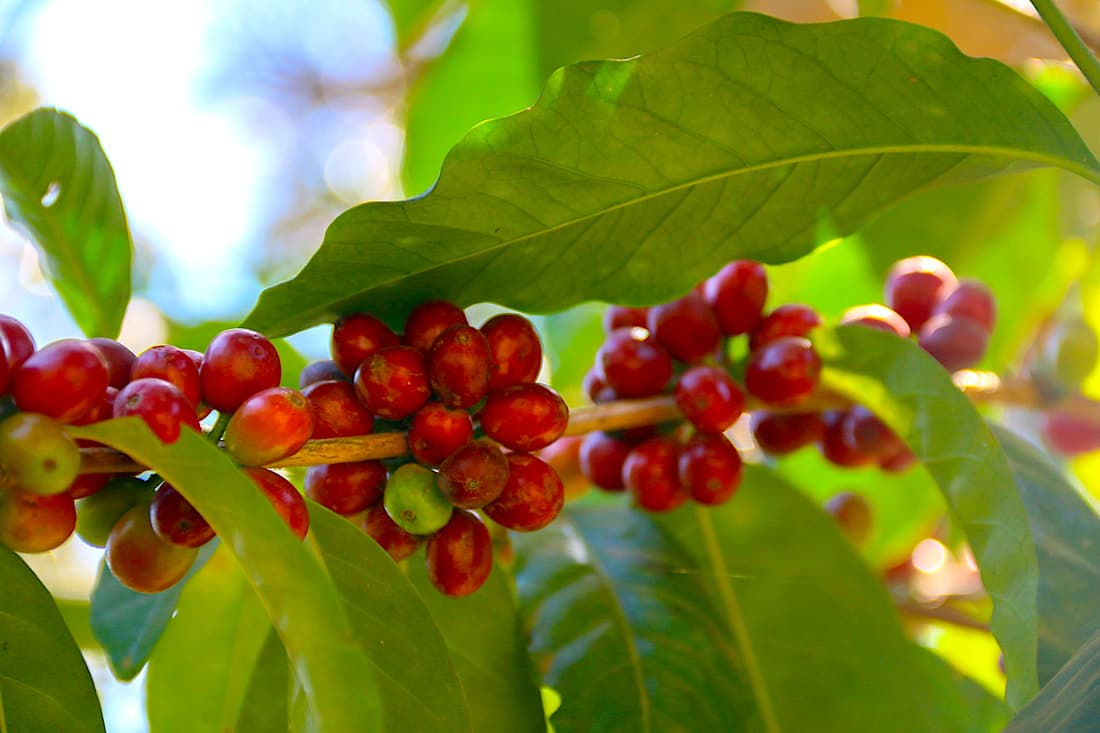
The term "Ethiopian Heirloom" is used to describe the indigenous landrace coffee varieties native to Ethiopia – the only place in the world where Arabica coffee grows wild and has evolved naturally for thousands of years. These varieties represent the most genetically diverse coffee population on Earth, encompassing thousands of distinct genetic variations that can differ dramatically from farm to farm, region to region, and forest to forest.
Understanding Ethiopian heirloom varieties is essential for anyone sourcing, buying, or roasting Ethiopian coffee. This diversity is both Ethiopia's greatest strength and its most confusing aspect for international buyers accustomed to named varieties like Bourbon, Typica, Caturra, or Gesha.
Key Insight: Ethiopia is home to an estimated 10,000-15,000 distinct coffee genotypes (genetic variations). By comparison, the rest of the world's coffee-growing regions combined work with fewer than 100 commonly cultivated varieties. This genetic treasure represents coffee's past, present, and future.
In This Guide
- 1. What Does "Ethiopian Heirloom" Actually Mean?
- 2. Landrace vs. Cultivar: Understanding the Difference
- 3. Ethiopian Coffee's Unparalleled Genetic Diversity
- 4. Why Ethiopian Coffee Lacks Named Varieties
- 5. Regional Heirloom Variations: How Geography Shapes Genetics
- 6. Common Ethiopian Variety Identifiers & What They Mean
- 7. JARC Varieties: Ethiopia's Named Coffee Selections
- 8. Gesha/Geisha: Ethiopia's Most Famous Export
- 9. How Heirloom Genetics Influence Flavor
- 10. Sourcing Ethiopian Heirloom Coffee: What to Ask
- 11. The Future: DNA Analysis & Variety Identification
- 12. Genetic Conservation & Ethiopia's Coffee Heritage
1. What Does "Ethiopian Heirloom" Actually Mean?
The term "Ethiopian Heirloom" is industry shorthand used to describe the indigenous, naturally occurring coffee varieties native to Ethiopia. It's a catch-all term that acknowledges:
- Indigenous origin: These varieties evolved naturally in Ethiopia over millennia, not imported or bred elsewhere
- Uncharacterized diversity: The specific genetic makeup has not been fully cataloged or DNA-sequenced
- Mixed populations: Most farms grow multiple genetically distinct varieties side-by-side
- Traditional propagation: Varieties perpetuated through seed selection by farmers, not formal breeding programs
- Regional variation: The genetic population differs significantly between regions and even between neighboring farms
When a coffee bag says "Ethiopian Heirloom," it's essentially saying: "This coffee comes from the indigenous, genetically diverse landrace varieties grown in Ethiopia, which we have not individually identified or DNA-tested."
Why "Heirloom" Can Be Misleading
In agriculture, "heirloom" typically refers to old, open-pollinated varieties that have been preserved unchanged for generations (like heirloom tomatoes). Ethiopian coffee varieties are not preserved unchanged – they continue to cross-pollinate, mutate, and evolve naturally. A more accurate term would be "landrace" or "indigenous varieties," but "Ethiopian Heirloom" has become the industry-standard terminology.
2. Landrace vs. Cultivar: Understanding the Difference
To understand Ethiopian heirloom varieties, you need to understand the difference between landraces and cultivars:
Landrace Varieties
What Ethiopian coffee is:
- • Naturally evolved over thousands of years
- • Genetically heterogeneous (diverse)
- • Adapted to specific local environments
- • Propagated through farmer seed selection
- • Contains multiple genetic variations
- • Continuously evolving through natural selection
- • Highly variable plant-to-plant characteristics
- • Not formally named or registered
Cultivars (Cultivated Varieties)
What most global coffee is:
- • Selected and bred by humans
- • Genetically homogeneous (uniform)
- • Deliberately propagated for specific traits
- • Clonally reproduced or controlled seed lines
- • Single genetic identity
- • Stable and predictable characteristics
- • Uniform plant-to-plant appearance
- • Formally named (e.g., Bourbon, Caturra, SL28)
Ethiopian heirloom varieties are landraces, not cultivars. This is why they're so difficult to categorize, name, or describe with the precision buyers accustomed to named cultivars might expect.
3. Ethiopian Coffee's Unparalleled Genetic Diversity
Ethiopia is the center of origin for Coffea arabica. Coffee evolved here over hundreds of thousands of years, and Ethiopia remains the only place where wild Arabica populations still exist in natural forest ecosystems.
The Numbers Behind Ethiopian Genetic Diversity
| Metric | Ethiopia | Rest of World |
|---|---|---|
| Estimated distinct genotypes | 10,000-15,000+ | <100 commonly cultivated |
| Genetic diversity within populations | High - heterogeneous | Low - homogeneous |
| Wild coffee populations | Yes - actively evolving | No wild Arabica |
| Genetic base for global coffee | All Arabica traces to Ethiopia | Narrow genetic bottleneck |
The Global Coffee Genetic Bottleneck
Here's the remarkable story of coffee genetics:
Ethiopian Origin (500,000+ years ago)
Arabica coffee evolved in the highlands of southwestern Ethiopia through natural cross-pollination between Coffea canephora (Robusta) and Coffea eugenioides. Thousands of distinct populations developed across Ethiopian forests.
Yemen Export (15th-17th century)
A small number of Ethiopian coffee seeds/plants were taken to Yemen, then to India, Java, and eventually the Americas. This created a genetic bottleneck – the entire global coffee industry descended from a tiny fraction of Ethiopian genetic diversity.
Typica & Bourbon Lines
Most coffee grown outside Ethiopia descends from two founding populations: Typica (introduced to the Americas via Java) and Bourbon (introduced to Réunion Island, formerly Bourbon). These represent an extremely narrow genetic base compared to Ethiopian diversity.
Modern Breeding Programs
Recognizing the genetic bottleneck, modern breeding programs have returned to Ethiopia to collect diverse germplasm for disease resistance, climate adaptation, and quality improvement. Ethiopia remains the genetic reservoir for coffee's future.
Why This Matters: Ethiopian heirloom varieties possess genetic traits that don't exist anywhere else in the coffee world – disease resistance, drought tolerance, unique flavor compounds, and adaptation potential crucial for coffee's survival in a changing climate. This diversity is irreplaceable.
4. Why Ethiopian Coffee Lacks Named Varieties
If Ethiopian coffee is so genetically diverse, why don't we have specific variety names like we do for coffee from Kenya (SL28, SL34), Latin America (Bourbon, Caturra, Catuai), or other origins?
The Challenges of Naming Ethiopian Varieties
- Sheer Volume: With 10,000-15,000 distinct genotypes, systematically naming and cataloging each variety is an enormous undertaking that has never been completed
- Mixed Populations: Ethiopian smallholder farms (average 0.5 hectares) grow multiple varieties side-by-side in the same plot, making variety-specific identification impractical
- Morphological Similarity: Many Ethiopian varieties look similar to the naked eye despite genetic differences, requiring DNA analysis for accurate identification
- Continuous Evolution: Natural cross-pollination means the genetic composition is constantly changing, unlike clonally-propagated cultivars
- Traditional Farming: Ethiopian farmers traditionally haven't selected or propagated specific varieties with precision – they work with the natural population on their land
- Processing & Trade: Coffee from multiple farms (and thus multiple varieties) is processed together, making single-variety traceability difficult
- Limited Research Resources: Comprehensive genetic mapping requires significant research funding and laboratory capacity that has historically been limited
The Practical Reality
When you purchase Ethiopian green coffee, you're almost always buying a blend of multiple genetic varieties from the same region. This isn't a quality issue – it's simply the nature of Ethiopian coffee production. In fact, many buyers and roasters appreciate this complexity as it contributes to the layered, intricate flavor profiles Ethiopian coffee is famous for.
5. Regional Heirloom Variations: How Geography Shapes Genetics
While we can't identify specific varieties, we can observe that Ethiopian heirloom populations vary significantly by region. Centuries of natural selection and farmer seed saving have created distinct regional genetic profiles.
Major Ethiopian Coffee Regions & Their Heirloom Characteristics
Yirgacheffe Region
Genetic Characteristics:
- • Smaller bean size (often 15-16 screen)
- • Dense, compact plant structure
- • High-altitude adaptation (1,750-2,200m)
- • Excellent natural disease resistance
Flavor Implications:
- • Pronounced floral notes (jasmine, bergamot)
- • Bright, vibrant acidity
- • Tea-like body
- • Complex citrus and stone fruit
Sidama Region
Genetic Characteristics:
- • Slightly larger bean size than Yirgacheffe
- • Vigorous plant growth
- • Good productivity (for Ethiopian standards)
- • Altitude range 1,550-2,200m
Flavor Implications:
- • Balanced sweetness and acidity
- • Berry-forward (blueberry, strawberry)
- • Medium to full body
- • Chocolate and caramel undertones
Guji Zone
Genetic Characteristics:
- • High genetic diversity even within Guji
- • Mixed forest and garden coffee
- • Altitude 1,800-2,350m
- • Wild coffee genetic influence
Flavor Implications:
- • Fruit-forward (stone fruits, tropical notes)
- • Wine-like complexity
- • Vibrant acidity
- • Floral and berry notes
Kaffa, Bench Maji, Illubabor (Forest Coffee)
Genetic Characteristics:
- • Wild and semi-wild varieties
- • Maximum genetic diversity
- • Original Arabica gene pool
- • Shade-adapted genetics
Flavor Implications:
- • Earthy, winey, complex
- • Variable acidity
- • Full body
- • Unique wild coffee character
Harar Region (Eastern Highlands)
Genetic Characteristics:
- • Longberry and shortberry types
- • Drought-tolerant genetics
- • Lower altitude adaptation (1,400-2,000m)
- • Unique regional population
Flavor Implications:
- • Wild blueberry notes (natural processing)
- • Wine-like acidity
- • Heavy body
- • Chocolate and spice notes
Key Point: While we use "Ethiopian Heirloom" generically, the varieties from Yirgacheffe differ genetically from those in Guji, which differ from Kaffa forest varieties. Region acts as a useful proxy for describing genetic variation, even when we can't name specific varieties.
6. Common Ethiopian Variety Identifiers & What They Mean
While "Ethiopian Heirloom" is the most common descriptor, you may occasionally encounter other variety terminology on Ethiopian coffee bags. Here's what these terms actually mean:
| Term | What It Means | Accuracy |
|---|---|---|
| Ethiopian Heirloom | Generic term for indigenous Ethiopian landrace varieties | ✓ Accurate general descriptor |
| Ethiopian Landrace | More technically correct term for native Ethiopian varieties | ✓ More precise than "heirloom" |
| Indigenous Varieties | Native varieties originating in Ethiopia | ✓ Accurate |
| Native Typica | Misleading - Typica is actually a variety that left Ethiopia centuries ago and was selected elsewhere | ✗ Technically incorrect |
| 74110, 74112, 74158, etc. | Specific named varieties developed by Jimma Agricultural Research Center (JARC) | ✓ Accurate if actually planted |
| Wild Forest Varieties | Coffee from wild or semi-wild forest populations in southwestern Ethiopia | ✓ Accurate for forest coffee |
| Gesha/Geisha | Variety originally from Gesha village, Ethiopia, now famous worldwide | △ Rarely verified in Ethiopia |
| Mixed Heirloom | Explicitly acknowledges multiple varieties in the lot | ✓ Honest descriptor |
Beware of Over-Specific Claims
Be skeptical if an Ethiopian coffee bag lists specific variety names like "Bourbon" or "Typica" without further explanation. True Bourbon and Typica are rarely grown in Ethiopia (though some JARC varieties may have Bourbon parentage). Unless the seller can provide DNA verification or detailed provenance, such claims are likely generic approximations based on morphology (plant appearance) rather than genetic confirmation.
7. JARC Varieties: Ethiopia's Named Coffee Selections
Ethiopia does have officially named and registered coffee varieties, developed by the Jimma Agricultural Research Center (JARC), part of the Ethiopian Institute of Agricultural Research (EIAR).
What Are JARC Varieties?
Starting in the 1970s, JARC began systematic breeding and selection work to develop improved coffee varieties. The program selected promising individual trees from wild and cultivated Ethiopian coffee populations, evaluated them for traits like yield, disease resistance, cup quality, and adaptation, then released them as named varieties.
Notable JARC Varieties
74110 & 74112 (Released 1970s)
Early selections known for good yield and cup quality. Widely distributed to farmers.
74140, 74148, 74158 (Released 1980s-1990s)
Additional selections emphasizing disease resistance and regional adaptation.
74165 (More Recent)
Improved selections incorporating Coffee Berry Disease (CBD) resistance.
Ababuna, Bunna, Dessu, Gawe
Regionally-named varieties selected for specific agro-ecological zones.
JARC Varieties vs. Heirloom: Key Differences
| Aspect | JARC Varieties | Heirloom Landraces |
|---|---|---|
| Selection | Scientifically selected by researchers | Naturally evolved + farmer selection |
| Genetic uniformity | More uniform (but still from Ethiopian gene pool) | Highly diverse |
| Names | Official variety numbers/names | No specific names |
| Distribution | Through government extension programs | Already present on farms |
| Adoption rate | Limited - many farmers prefer traditional varieties | Dominant across Ethiopia |
Why JARC Varieties Are Rare in Specialty Coffee
Despite their official status, JARC varieties represent a small fraction of Ethiopian coffee production for several reasons:
- Limited adoption: Many farmers prefer their traditional landrace varieties
- Seedling distribution: Government seedling programs reach only a portion of coffee farmers
- Mixed planting: Even farmers who receive JARC seedlings often plant them alongside existing varieties
- Processing mix: Coffee from different varieties is processed together
- Quality perception: Some specialty buyers and farmers believe traditional heirloom varieties produce more complex cup profiles
For Buyers: If an Ethiopian coffee specifically lists a JARC variety number (like 74110), it indicates intentional variety selection and potentially more uniform genetics. However, most specialty Ethiopian coffee comes from traditional heirloom populations rather than JARC varieties.
8. Gesha/Geisha: Ethiopia's Most Famous Export
No discussion of Ethiopian varieties would be complete without addressing Gesha (also spelled Geisha) – perhaps the most famous and expensive coffee variety in the world.
The Gesha Story
1931-1936: Ethiopian Origins
Coffee seeds collected from forests near Gesha village in southwestern Ethiopia (Bench Maji zone) by British consul Richard Whalley. Initially collected for its resistance to Coffee Leaf Rust.
1950s-1960s: Tanzania & Kenya
The Gesha germplasm was taken to research stations in Tanzania (Lyamungu) and Kenya, where it was maintained but not widely planted due to low yields.
1963: Costa Rica
Seeds sent to CATIE (Tropical Agricultural Research and Higher Education Center) in Costa Rica for research purposes.
1990s: Panama
Don Pachi Serracin of Panama obtained seeds from CATIE and planted them at high altitude. The Peterson family at Hacienda La Esmeralda later acquired plants from Pachi.
2004: Global Recognition
Hacienda La Esmeralda's Gesha won the Best of Panama competition with an unprecedented 94.1 cupping score and sold for a record $21/lb. Gesha became a global phenomenon, now grown worldwide and selling for hundreds of dollars per pound.
Gesha in Ethiopia Today: The Irony
Here's the paradox: Gesha originated in Ethiopia, but almost all commercial "Gesha" coffee is grown elsewhere. Several factors explain this:
- 1. No single-variety cultivation tradition: Ethiopian farmers traditionally don't isolate and propagate individual varieties. Gesha grows mixed with other varieties in its native region.
- 2. Processing & trade systems: Ethiopian coffee is processed and traded in mixed lots, making single-variety separation difficult.
- 3. Lack of premium recognition: Until recently, Gesha from its native Ethiopia didn't command the premiums it does elsewhere, discouraging selective production.
- 4. Verification challenges: Without DNA testing, confirming Ethiopian coffee as "true Gesha" versus other local varieties is nearly impossible.
- 5. Better alternatives: Ethiopia has thousands of equally interesting varieties; focusing on one makes less sense than in countries with limited genetic diversity.
The "Ethiopian Gesha" Marketing Question
Some Ethiopian exporters now market coffee as "Ethiopian Gesha" or "Gesha Village" coffee. How should buyers evaluate these claims?
Questions to Ask:
- ✓ Is this from the Gesha village area in Bench Maji? (Geographic authenticity)
- ✓ Has the specific variety been DNA-verified as Gesha? (Genetic verification)
- ✓ Was this selectively propagated or just collected from the area? (Cultivation method)
- ✓ Does the cup profile match Gesha characteristics? (Floral, tea-like, jasmine, bergamot)
- ✓ Is this priced as authentic Gesha? (Market positioning)
Perspective: Coffee from near Gesha village can be exceptional regardless of whether it's the exact variety famous in Panama. Ethiopia's genetic diversity means other varieties from the region may be equally extraordinary. Focus on cup quality and origin story rather than getting fixated on the "Gesha" name.
9. How Heirloom Genetics Influence Flavor
Ethiopian heirloom varieties' genetic diversity translates directly into flavor complexity. Here's how genetics shape the cup:
Genetic Traits That Influence Flavor
Chemical Compound Production
- • Terpenes: Floral and fruity aromatics (linalool, geraniol)
- • Phenolic compounds: Contribute to body, astringency, antioxidants
- • Organic acids: Acidity type and intensity (citric, malic, phosphoric)
- • Sugars & amino acids: Sweetness precursors and Maillard browning
Physical Bean Characteristics
- • Bean density: Affects heat transfer during roasting
- • Bean size: Influences roasting behavior and extraction
- • Bean shape: Impacts how water flows during brewing
- • Cellulose structure: Affects soluble compounds release
Why Ethiopian Heirloom Tastes Different
Ethiopian heirloom coffee is famous for distinctive flavor characteristics that stem from genetic diversity:
Signature Ethiopian Heirloom Flavor Traits
Floral Complexity
Ethiopian varieties produce exceptional levels of floral aromatics – jasmine, bergamot, honeysuckle, lavender. This is genetically encoded in higher terpene production compared to varieties bred elsewhere.
Fruit-Forward Profiles
Berry notes (blueberry, strawberry, blackberry), stone fruits (peach, apricot), and citrus (lemon, orange, bergamot) are hallmarks. Natural processing amplifies these genetic predispositions.
Tea-Like Quality
Many Ethiopian heirlooms exhibit delicate, tea-like body with clean, complex flavors – quite different from the fuller-bodied Latin American profiles.
Bright, Complex Acidity
Ethiopian varieties produce vibrant, multi-dimensional acidity – often described as "sparkling" or "phosphoric" – rather than the simpler citric acidity common elsewhere.
Layered Complexity
Because you're tasting multiple varieties in one lot, Ethiopian coffee often displays layer upon layer of flavor – "complexity" is the defining characteristic.
Heirloom Diversity = Flavor Diversity
The mixed variety population in each Ethiopian lot creates a "flavor ensemble" where different genetics contribute different notes:
- Variety A might contribute pronounced floral notes
- Variety B adds berry sweetness
- Variety C provides structure and body
- Variety D contributes bright acidity
The result is the signature complexity Ethiopian coffee is famous for – a complexity that's harder to achieve with single-variety lots from other origins.
10. Sourcing Ethiopian Heirloom Coffee: What to Ask
When sourcing Ethiopian heirloom coffee, what questions should you ask your exporter? Here's a practical guide:
Essential Questions for Ethiopian Coffee Sourcing
✓ Region & Microclimate
Instead of asking for specific variety names, ask about:
- • Which zone/woreda (district) does this coffee come from?
- • What's the altitude range?
- • Is this from forest, garden, or plantation coffee?
- • What's the soil type and microclimate?
Why: Regional information gives you better insights than generic "heirloom" descriptor
✓ Farm Size & Collection
Understanding the sourcing structure:
- • Is this from a single cooperative, washing station, or multiple sources?
- • How many smallholder farmers contributed?
- • What's the average farm size?
- • Is there traceability to specific producers or kebeles (villages)?
Why: Helps you understand genetic diversity and quality consistency
✓ Processing & Separation
Quality control practices:
- • Is this lot day-separated (single-day harvest)?
- • Was cherry sorted by ripeness before processing?
- • What's the drying method and timeline?
- • Is this a single-station lot or blended?
Why: Processing has huge flavor impact, often more than variety differences
✓ Cup Profile Consistency
Quality expectations:
- • What's the cupping score range?
- • What are the dominant flavor descriptors?
- • Is this profile consistent year-to-year?
- • Can you provide pre-shipment samples?
Why: Cup quality matters more than variety pedigree
What NOT to Over-Emphasize
Questions That Won't Help Much
- ✗ "What specific variety is this?" – Likely can't be answered with precision
- ✗ "Is this Typica or Bourbon?" – Usually neither, and impossible to verify without DNA
- ✗ "Can I get single-variety Ethiopian coffee?" – Rare and not necessarily better
- ✗ "Why don't you have variety details?" – This isn't a quality issue; it's the nature of Ethiopian coffee
Best Approach: Focus on region, altitude, processing method, and cup profile rather than pursuing specific variety identification. Ethiopian coffee's strength is its diversity – embrace it rather than trying to reduce it to simple variety names.
11. The Future: DNA Analysis & Variety Identification
The future of Ethiopian coffee variety identification lies in genomic research and DNA sequencing. Recent years have seen significant progress:
Recent Research Advances
Coffee Genome Sequencing (2014)
The arabica coffee genome and related genomic research provide a reference for genetic studies and variety identification - see World Coffee Research for ongoing summaries of coffee genetic research.
Ethiopian Diversity Studies
Multiple research institutions (including World Coffee Research and Ethiopian universities) are conducting genetic diversity surveys of Ethiopian coffee populations - see World Coffee Research for project links and publications.
DNA Fingerprinting Tools
Molecular markers (SNPs, microsatellites) allow precise variety identification. Several laboratories and service providers now offer DNA testing for coffee; World Coffee Research publishes resources and best-practice guidance.
Variety Databases
World Coffee Research maintains a Variety Catalog that is expanding to include Ethiopian germplasm with genetic and phenotypic data.
What This Means for the Industry
As DNA analysis becomes more accessible, we may see:
- Variety-specific lots: Ethiopian exporters could offer DNA-verified single-variety coffees for premium positioning
- Flavor-genetic correlation: Research linking specific genetic markers to flavor traits
- Terroir verification: Genetic "fingerprints" confirming regional origin claims
- Conservation priorities: Identifying genetically unique populations for protection
- Breeding efficiency: Using genetic data to develop improved varieties faster
Challenges Remain
- • Cost: DNA testing remains expensive for smallholder farmers
- • Scale: Testing thousands of farms is logistically complex
- • Database gaps: Many Ethiopian varieties haven't been genetically characterized yet
- • Value question: Will buyers pay enough premium to justify the testing costs?
- • Mixed lots: DNA testing confirms what's present but doesn't solve the mixed-variety reality
12. Genetic Conservation & Ethiopia's Coffee Heritage
Ethiopian heirloom varieties represent irreplaceable genetic wealth for global coffee. As the center of origin and the only place with wild Arabica populations, Ethiopia's role in coffee's future cannot be overstated.
Threats to Ethiopian Coffee Genetic Diversity
- Deforestation: Wild coffee forests in southwestern Ethiopia are shrinking due to agricultural expansion and logging, threatening wild populations
- Climate Change: Rising temperatures and changing rainfall patterns threaten coffee-growing zones and forest ecosystems
- Variety Replacement: Government programs promoting uniform "improved" varieties could reduce landrace diversity
- Generational Change: Young farmers may abandon traditional varieties for higher-yielding alternatives
- Economic Pressure: Low coffee prices can push farmers to convert land to other crops
Conservation Efforts
Active Conservation Initiatives
National Gene Bank
Ethiopian Biodiversity Institute maintains germplasm collections of Ethiopian coffee varieties
Forest Coffee Conservation
Programs protecting wild coffee forests in Kaffa, Illubabor, and Bench Maji
Research Collections
JARC and international research institutions maintain living collections of Ethiopian germplasm
International Collaboration
World Coffee Research, CATIE, and other institutions preserve Ethiopian varieties globally
Market-Based Conservation
Specialty coffee premiums incentivize farmers to maintain traditional varieties and forest systems
How Buyers Can Support Conservation
Practical Actions for Coffee Importers & Roasters:
- ✓ Pay premiums for Ethiopian heirloom coffee that reward farmers for maintaining diversity
- ✓ Source forest coffee from protected areas like Kaffa Biosphere Reserve
- ✓ Support certification programs (Bird Friendly, organic) that encourage biodiversity
- ✓ Tell the story of Ethiopian genetic diversity to your customers
- ✓ Form direct relationships with Ethiopian cooperatives and farmers
- ✓ Support organizations working on Ethiopian coffee conservation (see World Coffee Research)
- ✓ Choose Ethiopian coffee over genetically-narrow alternatives when possible
Conclusion: Embracing Ethiopian Heirloom Complexity
Ethiopian heirloom varieties defy the simple categorization coffee buyers from other origins might expect. There are no clean variety names, no uniform genetic lines, no predictable plant-to-plant consistency. Instead, there's magnificent, beautiful, essential diversity – the genetic foundation of all the world's coffee.
Rather than viewing "Ethiopian Heirloom" as vague or imprecise, understand it as an honest acknowledgment of natural complexity. This diversity is Ethiopia's greatest strength, contributing to the layered, intricate, endlessly fascinating flavors that make Ethiopian coffee incomparable.
As DNA research advances, we'll gain deeper insights into Ethiopian coffee genetics. But the fundamental reality will remain: Ethiopian coffee is not a single variety or even hundreds of varieties – it's a living, evolving genetic ecosystem that has sustained coffee for millennia and holds the keys to its future.
Key Takeaways
- "Ethiopian Heirloom" describes indigenous landrace varieties, not a single named variety
- Ethiopia has 10,000-15,000 distinct genotypes – unmatched global diversity
- Most Ethiopian coffee is mixed varieties from the same region
- Regional variation is more meaningful than variety names for Ethiopian coffee
- Genetic diversity = flavor complexity – Ethiopia's strength
- Focus on region, processing, and cup quality rather than pursuing specific variety names
- Ethiopian heirloom conservation is critical for coffee's global future
Source Exceptional Ethiopian Heirloom Coffee
Looking for Ethiopian heirloom coffee with full transparency? Ethio Coffee Export sources from diverse regions across Ethiopia's premier coffee zones:
- ✓ Yirgacheffe, Sidama, Guji highland heirlooms
- ✓ Wild forest coffee from Kaffa and Bench Maji
- ✓ Complete regional traceability
- ✓ Processing method transparency
- ✓ Pre-shipment cupping samples
- ✓ Direct relationships with cooperatives
Contact us to discuss your sourcing needs and explore the remarkable diversity of Ethiopian heirloom varieties.
Related Articles
- → Coffee Is a Plant: Understanding Taxonomy, Species & Varieties
- → A Practical Guide to Ethiopian Green Coffee Origins
- → Yirgacheffe vs Sidamo vs Guji: Which Ethiopian Coffee Is Right for You?
- → Sourcing Green Coffee from Ethiopia: Complete Guide
- → Ethiopian Coffee Certifications Guide: Organic, Fair Trade, Rainforest Alliance & More