ETHIOPIAN COFFEE CERTIFICATIONS GUIDE: ORGANIC, FAIR TRADE, RAINFOREST ALLIANCE & MORE
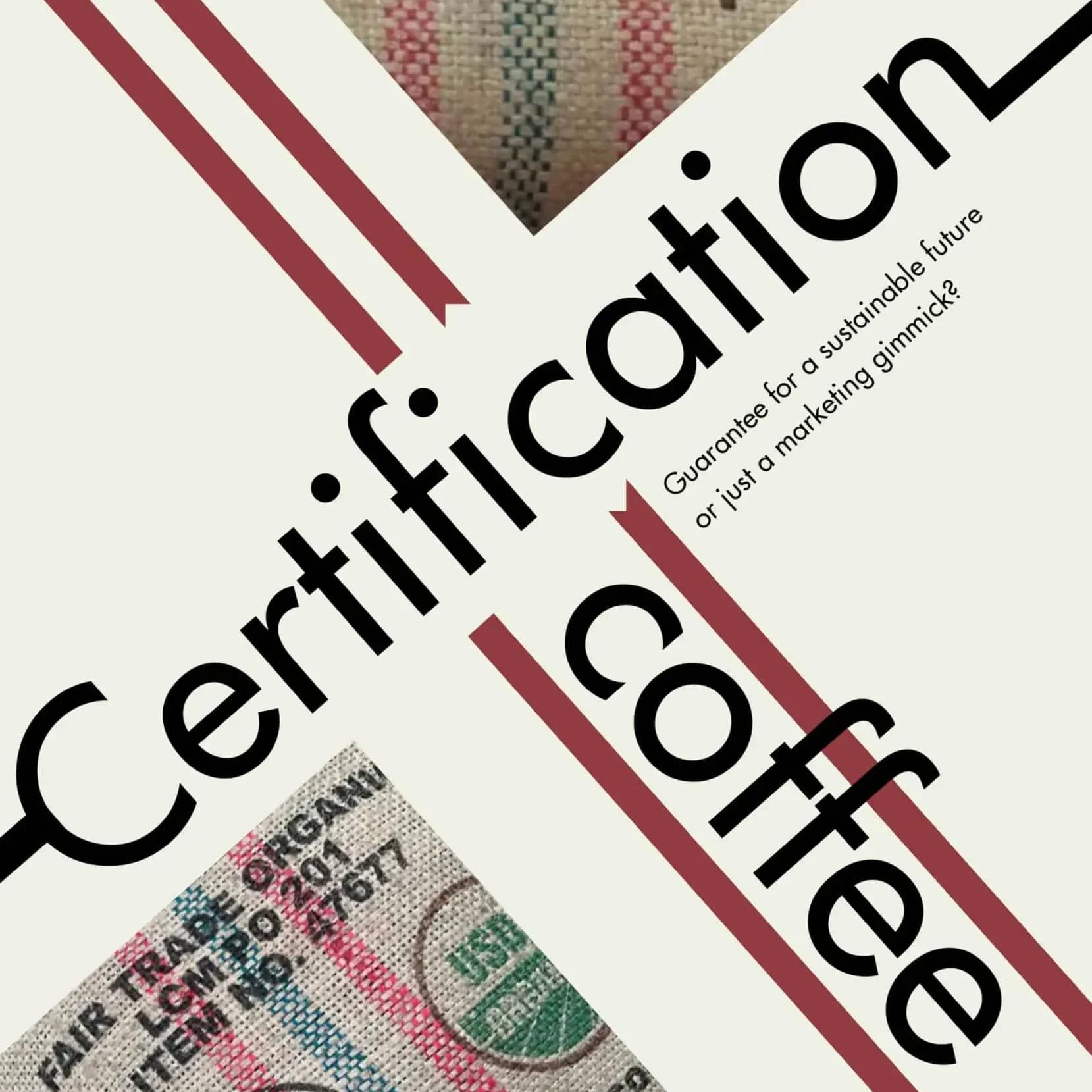
The definitive guide to coffee certifications for Ethiopian green coffee: understanding Organic, Fair Trade, Rainforest Alliance, UTZ, and Bird Friendly certifications – what they mean, how to source them, their costs, and which certification aligns with your business values and customer expectations.
Jan 31, 2026
When sourcing Ethiopian green coffee, certifications increasingly influence buying decisions for roasters, importers, and retailers worldwide. Your customers want assurance that their coffee was produced sustainably, that farmers received fair compensation, and that environmental standards were maintained throughout production.
But navigating the landscape of coffee certifications can be overwhelming. What's the difference between Organic and Rainforest Alliance? Does Fair Trade certification actually help Ethiopian farmers? Which certification commands the highest premium? And most importantly, which certified Ethiopian coffees should you source for your business?
This comprehensive guide breaks down every major coffee certification available for Ethiopian green coffee, explaining what each certification means in practice, the standards involved, cost implications for buyers, and how to source certified Ethiopian coffee that aligns with your business values and customer expectations.
Key Insight: Ethiopia has one of the highest rates of organic coffee production in the world due to traditional farming practices – over 95% of Ethiopian coffee is grown without synthetic inputs, but only a fraction carries official organic certification due to the costs and complexity of the certification process.
In This Guide
- 1. Why Coffee Certifications Matter for Ethiopian Coffee
- 2. Overview of Major Coffee Certifications
- 3. Organic Certification (USDA, EU Organic, JAS)
- 4. Fair Trade Certification (Fairtrade International, Fair Trade USA)
- 5. Rainforest Alliance Certification (Including UTZ)
- 6. Bird Friendly (Smithsonian) Certification
- 7. Direct Trade vs. Certifications: What's the Difference?
- 8. Certification Costs & Premiums: What Buyers Pay
- 9. Ethiopian Coffee Certification Landscape
- 10. Choosing the Right Certification for Your Business
- 11. How to Source Certified Ethiopian Coffee
- 12. The Future of Coffee Certifications
1. Why Coffee Certifications Matter for Ethiopian Coffee
Coffee certifications serve as third-party verification that coffee was produced according to specific environmental, social, or economic standards. For Ethiopian coffee specifically, certifications matter for several critical reasons:
For Buyers & Roasters
- ✓ Customer demand: Consumers increasingly expect sustainably-sourced coffee
- ✓ Risk management: Certified supply chains are more transparent and traceable
- ✓ Marketing advantage: Certification logos communicate values instantly
- ✓ Retail requirements: Many retailers require certified products
- ✓ ESG compliance: Corporate sustainability reporting often requires certified sourcing
For Ethiopian Farmers
- ✓ Price premiums: Certified coffee typically commands higher prices
- ✓ Market access: Certification opens doors to premium buyers
- ✓ Farming knowledge: Certification programs include training
- ✓ Community development: Fair Trade includes social premiums
- ✓ Environmental protection: Supports sustainable land management
Ethiopia's unique position as the birthplace of coffee, with over 15 million people dependent on the coffee sector and predominantly smallholder production (average farm size under 0.5 hectares), makes certifications particularly significant. Certifications help Ethiopian farmers access specialty markets and receive recognition for traditional, low-input farming practices that have sustained coffee forests for centuries.
2. Overview of Major Coffee Certifications
Before diving deep into each certification, here's a comparative overview of the major coffee certifications you'll encounter when sourcing Ethiopian green coffee:
| Certification | Primary Focus | Typical Premium | Ethiopian Availability |
|---|---|---|---|
| Organic (USDA/EU/JAS) | Environmental – No synthetic inputs | $0.20-0.50/lb | High availability |
| Fairtrade International | Social – Fair prices & labor rights | $0.20/lb minimum + $0.20 social premium | High availability |
| Fair Trade USA | Social – Broader supply chain | $0.20/lb premium | Moderate availability |
| Rainforest Alliance | Environmental & Social – Sustainable agriculture | $0.03-0.10/lb | High availability |
| Bird Friendly (Smithsonian) | Environmental – Shade-grown & organic | $0.25-0.50/lb | Limited availability |
| 4C (Common Code) | Baseline sustainability | No fixed premium | Moderate availability |
Important: Many Ethiopian coffees carry multiple certifications simultaneously. It's common to find Ethiopian coffee that is both Organic AND Fair Trade certified, or Rainforest Alliance AND Organic certified. Dual or triple certifications can command higher premiums and broader market appeal.
3. Organic Certification (USDA, EU Organic, JAS)
Organic certification verifies that coffee was grown and processed without synthetic fertilizers, pesticides, herbicides, or genetically modified organisms (GMOs). It's the most widely recognized and demanded sustainability certification in the coffee industry.
What Organic Certification Requires
Core Organic Standards
- No synthetic pesticides or herbicides: Only approved organic pest management methods
- No synthetic fertilizers: Compost, manure, and natural inputs only
- No GMOs: Genetically modified organisms prohibited
- Transition period: Land must be chemical-free for 3 years before certification
- Buffer zones: Distance requirements from non-organic farms
- Segregated processing: Organic coffee must be processed separately
- Full traceability: Documentation from farm to export
- Annual inspections: Third-party audits every year
The Three Major Organic Standards
USDA Organic
Required for US market sales
- • Administered by USDA National Organic Program (NOP)
- • Certifiers must be USDA-accredited
- • Covers production, processing, handling
- • USDA and EU Organic have equivalency agreement
EU Organic
Required for European Union sales
- • Governed by EU Regulation 2018/848
- • Slightly stricter soil management rules
- • USDA-EU equivalency allows dual labeling
- • New EU Organic rules from January 2022
JAS Organic
Required for Japanese market
- • Japanese Agricultural Standards
- • No equivalency with USDA/EU
- • Separate certification required
- • Growing demand in Japan for organic Ethiopian
Organic Certification & Ethiopian Coffee: A Natural Fit
Ethiopia is uniquely positioned for organic certification because traditional Ethiopian coffee farming is inherently organic. The vast majority of Ethiopian coffee is grown by smallholder farmers using methods passed down through generations:
- No synthetic inputs: Most Ethiopian farmers cannot afford chemical fertilizers or pesticides, and traditional practices don't use them
- Forest-grown coffee: Much Ethiopian coffee grows in wild or semi-wild forest conditions with natural biodiversity
- Shade cultivation: Traditional shade-growing provides natural pest control and eliminates need for chemicals
- Composting: Ethiopian farmers traditionally use organic matter and coffee pulp as natural fertilizer
- Genetic diversity: Ethiopia's heirloom varieties have natural disease resistance
The Certification Gap
While an estimated 95% of Ethiopian coffee is grown organically by default, only about 5-10% carries official organic certification. The gap exists because certification requires annual audits, documentation systems, and fees that smallholder farmers and smaller cooperatives struggle to afford. This represents both a challenge and an opportunity for the Ethiopian coffee sector.
Major Ethiopian Organic Coffee Origins
Organic-certified Ethiopian coffee is available from most major producing regions:
- Yirgacheffe: Extensive organic certification through cooperatives like Yirgacheffe Coffee Farmers Cooperative Union (YCFCU)
- Sidamo/Sidama: Major organic production through Sidama Coffee Farmers Cooperative Union (SCFCU)
- Guji: Growing organic certification programs, particularly for wild-grown coffee
- Limu: Forest coffee with strong organic potential
- Jimma: Large cooperative unions with organic certification
Organic Coffee Premiums
| Market Segment | Typical Organic Premium |
|---|---|
| Commercial grade organic | $0.15-0.25/lb over conventional |
| Specialty grade organic (80-84 points) | $0.25-0.40/lb over conventional |
| High specialty organic (85+ points) | $0.40-0.60/lb over conventional |
| Organic + Fair Trade dual certification | Combined premiums may reach $0.50-0.80/lb |
4. Fair Trade Certification
Fair Trade certification focuses on the social and economic dimensions of coffee production, ensuring that farmers receive fair prices, have safe working conditions, and that communities benefit from a social development premium.
Understanding the Fair Trade Split
In 2011, the Fair Trade movement split into two separate organizations with different standards:
- Fairtrade International (FLO): The original global system, dominant in Europe and most markets. Requires certification of producer organizations (cooperatives), not individual farms or estates.
- Fair Trade USA: Split from FLO in 2011 to allow certification of estates/plantations and individual farmers, not just cooperatives. More common for US market sales.
Both systems share similar goals but have different criteria for who can be certified. Most Ethiopian Fair Trade coffee is certified under Fairtrade International (FLO).
Fairtrade International (FLO) Standards
Key Fairtrade Requirements
Economic Standards:
- • Minimum Price: Floor price protecting farmers from market crashes
- • Fairtrade Premium: Additional $0.20/lb for community investment
- • Pre-financing: Up to 60% advance payment on request
- • Long-term contracts: Stable trading relationships
Social Standards:
- • Democratic organization (cooperatives)
- • No forced or child labor
- • Non-discrimination policies
- • Safe working conditions
- • Freedom of association
Fairtrade Pricing Structure for Coffee
2024-2026 Fairtrade Minimum Prices for Coffee
| Coffee Type | Minimum Price (FOB) | Premium |
|---|---|---|
| Washed Arabica | $1.80/lb | +$0.20/lb |
| Washed Arabica Organic | $2.10/lb | +$0.20/lb |
| Natural Arabica | $1.75/lb | +$0.20/lb |
| Natural Arabica Organic | $2.05/lb | +$0.20/lb |
Note: When market prices exceed the minimum price, farmers receive market price + the $0.20/lb premium. The minimum price acts as a safety net when market prices fall.
How the Fairtrade Premium Is Used
The $0.20/lb Fairtrade Premium is paid directly to the cooperative, which democratically decides how to invest it. In Ethiopian cooperatives, common uses include:
Education
Building schools, scholarships, adult literacy programs
Healthcare
Medical clinics, health insurance, clean water projects
Farm Investment
Seedlings, processing equipment, training programs
Fair Trade in Ethiopia: Cooperative Structure
Ethiopia's coffee sector is well-suited to Fair Trade certification because of its strong cooperative tradition. The Ethiopian coffee cooperative system includes:
- Primary cooperatives: Village-level organizations of smallholder farmers (typically 200-2,000 members)
- Cooperative unions: Federations of primary cooperatives that handle processing, quality control, and export
- Democratic governance: Members vote on leadership, premium use, and major decisions
Major Ethiopian Fair Trade certified cooperative unions include:
- Oromia Coffee Farmers Cooperative Union (OCFCU): One of the largest, representing over 400 cooperatives and 400,000+ farmers across Oromia region
- Yirgacheffe Coffee Farmers Cooperative Union (YCFCU): Specializing in premium Yirgacheffe coffees
- Sidama Coffee Farmers Cooperative Union (SCFCU): Major producer of washed and natural Sidamo coffees
- Kaffa Forest Coffee Farmers Cooperative Union: Wild forest coffee from the birthplace of coffee
- Guji Highland Coffee Union: Growing producer of specialty Guji coffees
Criticisms and Limitations of Fair Trade
While Fair Trade has delivered significant benefits, it faces legitimate criticisms that buyers should understand:
- Minimum price obsolescence: When specialty coffee prices are high (as in 2024-2026), the minimum price becomes irrelevant; farmers get market price regardless
- Premium distribution: Questions about whether premiums reach individual farmers vs. staying at cooperative level
- Certification costs: Annual fees can burden small cooperatives
- Quality neutrality: Fair Trade doesn't differentiate by quality – premium coffees get same minimum as lower grades
- Cooperative-only model: Excludes individual farmers and private estates (under Fairtrade International)
Buyer Perspective: Fair Trade certification remains valuable for communicating social commitment to consumers. However, for specialty coffee buyers focused on quality, Fair Trade should be viewed as a baseline social standard rather than a quality indicator. The highest quality Ethiopian coffees may or may not carry Fair Trade certification.
5. Rainforest Alliance Certification
Rainforest Alliance certification takes a comprehensive approach to sustainable agriculture, addressing environmental conservation, social equity, and economic viability through a single integrated standard.
UTZ Merger
In 2018, Rainforest Alliance merged with UTZ, another major sustainability certification. As of 2020, all coffee is certified under the unified Rainforest Alliance 2020 Standard. If you encounter "UTZ Certified" Ethiopian coffee from older inventories, it's now equivalent to Rainforest Alliance certification.
Rainforest Alliance 2020 Standard: Key Requirements
The Rainforest Alliance standard is built on three pillars:
🌳 Environmental
- • Forest and ecosystem conservation
- • No deforestation after 2014 cutoff
- • Biodiversity protection
- • Water resource management
- • Integrated pest management
- • Soil conservation
- • Climate change mitigation
- • Waste management
Social
- • Freedom from forced labor
- • Freedom from child labor
- • Living wage progress
- • Safe working conditions
- • Freedom of association
- • Gender equality measures
- • Community relations
- • Worker housing standards
Economic
- • Sustainability Differential payment
- • Sustainability Investment payment
- • Farm management planning
- • Traceability systems
- • Productivity improvement
- • Market access support
- • Risk assessment tools
Rainforest Alliance Pricing: Sustainability Differential
Unlike Fair Trade's fixed premium, Rainforest Alliance uses a Sustainability Differential and Sustainability Investment system:
Rainforest Alliance Payment Structure
| Payment Type | Amount | Purpose |
|---|---|---|
| Sustainability Differential | Negotiated (no fixed minimum) | Cash payment to producer for certified product |
| Sustainability Investment | Mandatory component | Investment in farm sustainability improvements |
In practice, Rainforest Alliance premiums typically range from $0.03-0.10/lb, lower than Fair Trade, reflecting the program's focus on continuous improvement rather than price floors.
Rainforest Alliance vs. Fair Trade: Key Differences
| Aspect | Rainforest Alliance | Fairtrade |
|---|---|---|
| Primary focus | Environmental sustainability | Social/economic fairness |
| Minimum price | No minimum price | Yes – floor price protection |
| Premium structure | Negotiated differential | Fixed $0.20/lb premium |
| Who can certify | Farms, estates, groups, cooperatives | Cooperatives only (FLO) |
| Deforestation cutoff | 2014 | No specific cutoff date |
| Consumer recognition | Growing (frog logo) | High (established brand) |
Ethiopian Coffee & Rainforest Alliance
Rainforest Alliance certification is widely available for Ethiopian coffee, particularly through:
- Large cooperative unions: Many Ethiopian unions carry both RA and Fair Trade certifications
- Private exporters: RA's flexibility allows certification of estate and private exporter supply chains
- Forest coffee: Ethiopia's shade-grown and forest coffee aligns well with RA's biodiversity requirements
For Buyers: Rainforest Alliance certification is often preferred by large commercial buyers and multinational roasters due to its broader supply chain coverage and lower premium costs. For specialty buyers seeking maximum social impact, Fair Trade may communicate more clearly to consumers, though RA's environmental standards are often stronger.
6. Bird Friendly Certification (Smithsonian)
Bird Friendly certification by the Smithsonian Migratory Bird Center is the most stringent shade-grown coffee certification available. It requires both organic certification AND specific shade-cover requirements that protect habitat for migratory birds.
Bird Friendly Certification Requirements
- Must be USDA Organic certified (Bird Friendly is an additional layer)
- Minimum 40% shade cover over the coffee
- Canopy height minimum 12 meters
- At least 10 woody species in shade canopy
- Multiple vegetation strata (layers of growth)
- Leaf litter preserved on ground
- Living fences or natural borders between plots
Ethiopian Coffee: Naturally Bird Friendly
Ethiopia's traditional forest coffee systems are ideal candidates for Bird Friendly certification. The highlands of southwestern Ethiopia – particularly the Kaffa, Illubabor, and Bench Maji zones – contain the world's last remaining wild Arabica coffee forests, which exceed Bird Friendly shade standards by nature.
However, Bird Friendly certified Ethiopian coffee remains relatively rare due to:
- Dual certification requirement: Must already have organic certification
- Limited awareness: The certification is less known in Ethiopia than Fair Trade or Organic
- Documentation burden: Detailed shade measurement and species documentation required
- Market access: Fewer buyers specifically seek Bird Friendly compared to organic
Bird Friendly Premiums
Bird Friendly coffee commands strong premiums due to its scarcity and combined organic + shade requirements:
| Certification Level | Typical Premium |
|---|---|
| Bird Friendly (includes organic) | $0.25-0.50/lb above conventional |
| Bird Friendly + Fair Trade | $0.45-0.75/lb above conventional |
Sourcing Tip: If you're specifically seeking Bird Friendly Ethiopian coffee, work with exporters who source from forest coffee regions like Kaffa, Bonga, or Sheka. These coffees may meet Bird Friendly standards even if not yet certified – representing an opportunity for buyers to support certification expansion.
7. Direct Trade vs. Certifications: What's the Difference?
Direct Trade is often mentioned alongside certifications, but it's fundamentally different – it's a sourcing philosophy, not a certification.
Certifications
- ✓ Third-party verified standards
- ✓ Official audit process
- ✓ Registered trademarks/logos
- ✓ Standardized requirements
- ✓ Annual fees and inspections
- ✓ Consumer-recognized labels
Direct Trade
- ✓ No official standard or verification
- ✓ Self-defined by each buyer
- ✓ No official logo or trademark
- ✓ Relationship-based approach
- ✓ No certification fees
- ✓ Requires buyer transparency to be credible
What Direct Trade Typically Means
When specialty roasters claim "direct trade," they usually mean:
- Direct relationship: The roaster buys directly from the producer (cooperative, estate, or exporter) without intermediary traders
- Price transparency: The roaster knows (and often publishes) exactly what the farmer received
- Quality focus: Purchases based on cupping score and quality, often 84+ points
- Premium prices: Typically paying well above Fair Trade minimums
- Farm visits: The buyer has visited the farm or cooperative personally
- Long-term commitment: Multi-year purchasing relationships
The Direct Trade Caveat
Because "direct trade" has no official definition or verification, it can be misused. Some buyers use the term loosely for any coffee purchased "directly" from an exporter, even if the exporter is a large commercial trader. True direct trade requires transparency – credible direct trade roasters publish their pricing, share farmer stories, and can document their supply chain.
Direct Trade + Certification: The Best of Both?
Direct trade and certifications are not mutually exclusive. Many specialty importers practice direct trade relationships while also sourcing certified coffees:
- Direct trade + Organic: Relationship-based sourcing of certified organic Ethiopian lots
- Direct trade + Fair Trade: Direct relationships with FT-certified cooperatives
- Direct trade replacing certification: Some specialty buyers prefer relationship transparency over third-party certification
Our Approach at Ethio Coffee Export: We facilitate both certified and direct trade relationships. For buyers seeking certifications, we source from certified cooperatives and can provide all documentation. For buyers preferring direct trade, we offer full transparency on pricing, farmer payments, and supply chain traceability. Many of our relationships combine both approaches.
8. Certification Costs & Premiums: What Buyers Pay
Understanding the economics of coffee certification helps buyers make informed sourcing decisions:
Cost Structure for Producers
Typical Annual Certification Costs (Cooperative Level)
| Certification | Initial Certification | Annual Renewal |
|---|---|---|
| Organic (USDA/EU) | $2,000-5,000 | $1,500-3,000 |
| Fairtrade | $2,000-4,000 | $1,500-2,500 |
| Rainforest Alliance | $1,500-3,500 | $1,000-2,000 |
| Bird Friendly | $500-1,500 (on top of organic) | $500-1,000 |
Costs vary significantly based on cooperative size, number of members, geographic spread of farms, and certifying body. Larger cooperatives achieve economies of scale.
Premium Summary for Buyers
Expected Premiums Over Conventional Ethiopian Coffee
| Certification | Premium Range | Notes |
|---|---|---|
| Organic only | $0.20-0.50/lb | Higher for specialty grades |
| Fair Trade only | $0.20/lb + price floor | Fixed premium structure |
| Organic + Fair Trade | $0.40-0.70/lb | Most common dual cert |
| Rainforest Alliance | $0.03-0.10/lb | Negotiated differential |
| Bird Friendly | $0.25-0.50/lb | Includes organic requirement |
9. Ethiopian Coffee Certification Landscape
Ethiopia's coffee certification landscape has evolved significantly over the past two decades. Here's the current state:
Certification Prevalence in Ethiopian Coffee
- Organic:Estimated 5-10% of exports carry certification, though 95%+ is grown organically
- Fair Trade:15-20% of exports, concentrated in cooperative unions
- Rainforest Alliance/UTZ:10-15% of exports, growing rapidly
- Bird Friendly:<1% of exports, but growing interest in forest regions
- 4C:5-10% of exports, primarily commercial grade
Ethiopian Government & Certification
The Ethiopian Coffee and Tea Authority (ECTA) and the government have increasingly supported certification as a strategy for value addition:
- National organic standard: Ethiopia has developed its own organic agriculture standard
- Certification support: Government programs help cooperatives achieve certification
- EUDR preparation: Ethiopia is building traceability infrastructure that will support certification documentation
- Cooperative strengthening: Investment in cooperative management supports certification capacity
Key Certified Ethiopian Coffee Sources
Major Certified Cooperative Unions
| Union | Region | Certifications |
|---|---|---|
| OCFCU | Oromia (multiple zones) | Organic, Fair Trade, RA |
| YCFCU | Yirgacheffe | Organic, Fair Trade |
| SCFCU | Sidama | Organic, Fair Trade, RA |
| Kaffa Forest Union | Kaffa | Organic, Fair Trade |
| Bench Maji Union | Bench Maji | Organic |
10. Choosing the Right Certification for Your Business
Which certification should you prioritize when sourcing Ethiopian coffee? The answer depends on your business model, customer expectations, and values:
Choose Organic If...
- Your customers prioritize health and environmental concerns
- You sell through health food stores or organic retailers
- You're targeting the US or EU markets where organic labeling matters
- You want the most widely recognized sustainability certification
- You're marketing to environmentally-conscious consumers
Choose Fair Trade If...
- Your customers care deeply about farmer welfare
- You want to communicate social responsibility simply
- Your business emphasizes community development stories
- You're selling to socially-conscious retail chains
- You want price floor protection during market downturns
Choose Rainforest Alliance If...
- You're a large-volume buyer needing broad supply
- Environmental/biodiversity protection is your priority
- You need certification at lower premium cost
- You're working with corporate sustainability requirements
- You need flexibility in supply chain structure
Choose Bird Friendly If...
- Your brand emphasizes environmental stewardship
- You target environmentally-engaged niche consumers
- You want the most rigorous shade-grown standard
- You're willing to pay premium prices for premium positioning
- Your marketing emphasizes biodiversity and conservation
Recommendation: For most specialty coffee roasters, Organic + Fair Trade dual certification offers the best combination of consumer recognition, social impact, and market positioning. This combination is widely available from Ethiopian cooperatives and communicates both environmental and social responsibility.
11. How to Source Certified Ethiopian Coffee
Ready to source certified Ethiopian coffee? Here's how to proceed:
Step 1: Determine Your Certification Needs
- Which certifications do your customers or retail partners require?
- What certifications align with your brand values?
- What premium are you able to pay?
- Do you need single certification or dual/triple certification?
Step 2: Verify Certification Status
Always verify certification claims through official databases:
- Organic (USDA):USDA Organic Integrity Database
- Fair Trade:FLOCERT Certified Operators
- Rainforest Alliance:RA Certificate Search
- Bird Friendly:Smithsonian Bird Friendly Directory
Step 3: Request Documentation
When purchasing certified coffee, ensure you receive:
- Valid certification certificate (check expiration date)
- Transaction certificate for each shipment
- Chain of custody documentation showing traceability
- Organic import certificate (for US/EU organic imports)
Step 4: Work with Certified Exporters
To source certified Ethiopian coffee, work with exporters who:
- Have established relationships with certified cooperatives
- Maintain their own certification for handling/processing
- Can provide full documentation and transaction certificates
- Understand destination market certification requirements
Ethio Coffee Export sources from certified cooperatives across Ethiopia and can provide Organic, Fair Trade, and Rainforest Alliance certified Ethiopian coffees with full documentation. Contact us to discuss your certification requirements and current availability.
12. The Future of Coffee Certifications
The certification landscape is evolving. Here are key trends affecting Ethiopian coffee:
Emerging Trends
EUDR Integration
The EU Deforestation Regulation will require traceability systems that complement and may eventually overlap with existing certifications. Ethiopian exporters preparing for EUDR will be better positioned for all certifications.
Living Wage Focus
Both Fair Trade and Rainforest Alliance are increasing emphasis on "living income" for farmers. New standards may require buyers to contribute to closing the gap between current farmer income and calculated living income.
Carbon & Climate Certifications
New certifications focused on carbon sequestration and climate resilience are emerging. Ethiopia's forest coffee systems have strong potential for carbon certification programs.
Technology-Enabled Traceability
Blockchain, satellite monitoring, and digital ID systems are making certification verification more robust and reducing fraud. Ethiopia is piloting digital traceability systems.
Certification Fatigue & Alternatives
Some specialty buyers are moving away from certifications toward direct trade with radical transparency. This trend favors quality-focused Ethiopian exporters who can provide detailed traceability without third-party certification.
Conclusion: Making Certifications Work for Your Business
Coffee certifications are tools – they help communicate values, verify practices, and connect consumers with the farmers who grow their coffee. For Ethiopian coffee specifically, certifications recognize and reward traditional practices that have sustained coffee cultivation for centuries.
Whether you choose Organic, Fair Trade, Rainforest Alliance, Bird Friendly, or pursue direct trade relationships, the key is alignment between your sourcing practices, brand values, and customer expectations.
Key Takeaways
- Ethiopian coffee is naturally suited for certification due to traditional low-input farming
- Organic + Fair Trade offers the best combination for most specialty roasters
- Verify all certification claims through official databases
- Multiple certifications are common and can strengthen market positioning
- Direct trade and certifications are complementary, not mutually exclusive
- Work with experienced exporters who can provide proper documentation
Source Certified Ethiopian Coffee with Ethio Coffee Export
Looking for certified Ethiopian green coffee? Ethio Coffee Export sources from certified cooperatives across Ethiopia's premier growing regions. We can provide:
- Organic certified (USDA/EU) Ethiopian coffees
- Fair Trade certified coffees from major unions
- Rainforest Alliance certified options
- Dual and triple certified lots
- Full documentation and transaction certificates
- Direct relationships with transparent pricing
Contact us to discuss your certification requirements and request current availability and pricing for certified Ethiopian specialty coffee.