A PRACTICAL GUIDE TO ETHIOPIAN GREEN COFFEE ORIGINS
A buyer-friendly guide to regions, processing, and roast direction
Nov 15, 2025
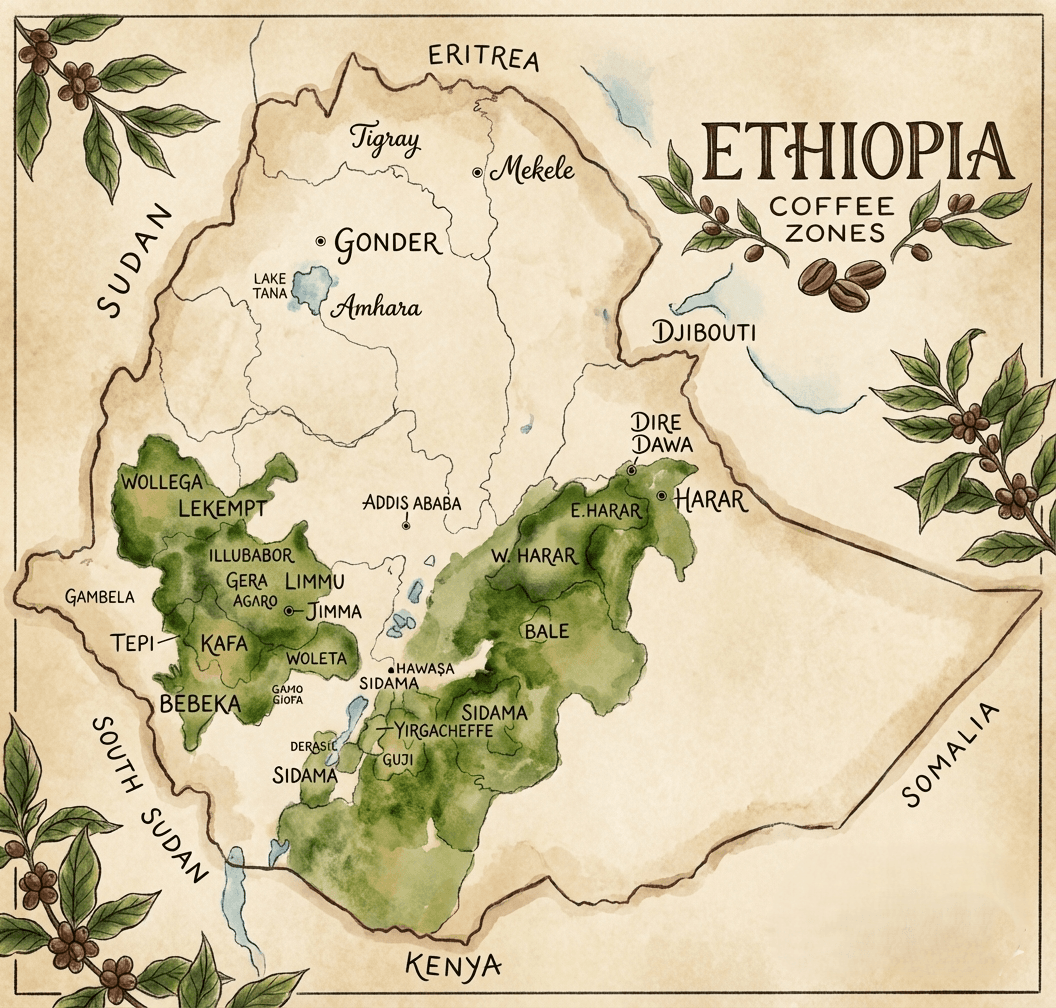
Ethiopian green coffee is often described with famous place names-Yirgacheffe, Guji, Sidama, Limu, Harrar, Kaffa, Jimma. For buyers, “origin” isn’t just geography: it’s a shorthand for altitude range, local genetics (“heirloom” selections), processing approach, and the mills/washing stations that shape the cup.
Note: Profiles vary by lot, washing station, and crop year. The ranges below are common reference points used in specialty coffee, not guarantees.
Featured Ethiopian Coffee Regions
Yirgacheffe - Washed, Floral & Delicate
- Region: Gedeo Zone (SNNPR / South Ethiopia)
- Processing: Commonly washed (naturals also exist)
- Altitude: ~1,700–2,200 m (varies by kebele/lot)
- Cup Profile: Jasmine, bergamot, lemon/black tea (often)
- Roast Tip: Light roast (City) to preserve florals and structure
Guji - Bright, Floral & Stone-Fruity
- Region: Oromia (Guji Zone, south/southeast)
- Processing: Both washed and natural are common
- Altitude: ~1,900–2,200 m (many lots high elevation)
- Cup Profile: White peach/stone fruit, lemongrass, floral-honey (lot dependent)
- Roast Tip: Light–medium (City to City+) for clarity and sweetness
Limu - Washed, Balanced & Citrusy
- Region: Oromia (western highlands)
- Processing: Commonly washed
- Altitude: ~1,800–2,000 m (typical range)
- Cup Profile: Citrus zest, cocoa, honey (often)
- Roast Tip: Medium (City+) can enhance body while keeping citrus lift
Harrar - Natural, Bold & Winey
- Region: Eastern Ethiopia (Hararghe area)
- Processing: Traditionally natural (sun-dried)
- Altitude: ~1,500–2,000 m (varies)
- Cup Profile: Dried fruit, cocoa, spice; sometimes berry-like notes (lot dependent)
- Roast Tip: Medium to Full City to balance fruit intensity and body
Sidama - Sweet, Juicy & Aromatic
- Region: Sidama (South Ethiopia)
- Processing: Washed is common; naturals also widely produced
- Altitude: ~1,600–2,200 m
- Cup Profile: Red berry, sugar cane, florals (often)
- Roast Tip: Light–medium to highlight sweetness and clarity
Kaffa - Wild-Rooted & Foresty
- Region: Kaffa (Southwest Ethiopia; often cited as Arabica’s ancestral home)
- Processing: Both washed and natural exist (varies by supplier)
- Altitude: ~1,400–2,000 m
- Cup Profile: Herbal tea, dark fruit, foresty/earthy notes (lot dependent)
- Roast Tip: Medium to bring balance and keep structure
Jimma (Djimma) - Traditional, Cocoa & Earthy
- Region: Oromia (Southwest Ethiopia)
- Processing: Often natural; washed lots also exist depending on supply
- Altitude: ~1,400–1,900 m
- Cup Profile: Cocoa, spice, earth; muted fruit compared to high-elevation washed lots
- Roast Tip: Medium to medium-dark can smooth edges and deepen cocoa
Roasting & Sourcing Tips
- Roast small batches and cup often to learn each lot’s sweet spot.
- Washed lots often reward lighter roasts; naturals can benefit from slightly more development time for balance.
- Store green coffee cool and dry, and avoid strong odors (greens absorb smells).
- When sourcing, ask for: washing station/mill, processing details, crop year, grade/screen, and a sample for evaluation.
Sourcing Ethiopian Green Coffee (for buyers worldwide)
If you’re buying green coffee (whether you’re in Canada or anywhere else), the most helpful step is moving from “country-level origin” to lot-level clarity. The best suppliers can share not only the region, but also the washing station/cooperative, processing details, and consistency expectations.
Want help choosing the right Ethiopian origin for your menu or roasting goals? We can recommend lots based on your target profile and share traceability details when available.
CONTACT US TO REQUEST SAMPLES