Sidama Region Coffee Production: Achieving 10+ Quintals Per Hectare & New Export Opportunities
Comprehensive guide to Sidama region's exceptional coffee productivity, farmer cluster organization, agricultural modernization initiatives, and new direct export licensing opportunities for smallholder coffee farmers achieving 10+ quintals per hectare production.
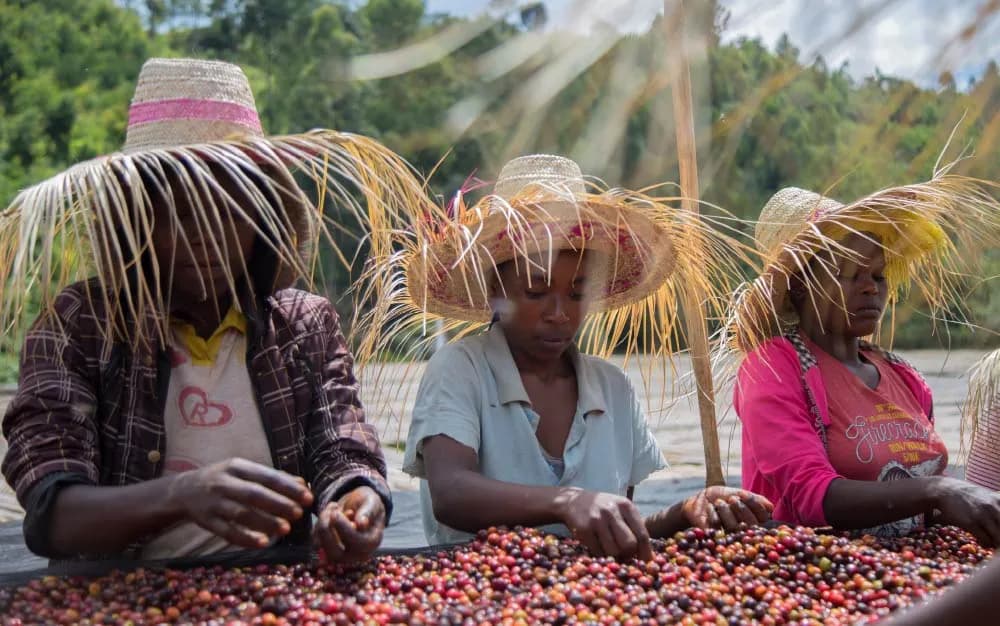
The Sidama region of Ethiopia, one of the country's most productive and renowned coffee-growing areas, is achieving remarkable agricultural success with average productivity exceeding 10 quintals (1,000 kg) per hectare in the 2025-2026 production season. This represents exceptional performance in Ethiopian coffee production, where national averages have historically been significantly lower.
According to Mesfin Qare, Chief Director of the Sidama Regional Coffee, Fruit, and Spices Authority, this productivity milestone reflects years of investment in farmer training, agricultural modernization, cooperative organization, and quality-focused production practices. With 176,000 hectares covered with coffee (146,000 hectares currently producing) and a seasonal target of 239,000 tons, Sidama region stands as a critical pillar of Ethiopia's specialty coffee industry.
This comprehensive guide explores Sidama region's coffee production landscape, the factors driving exceptional productivity, farmer cluster organization strategies, agricultural improvement initiatives, new direct export licensing opportunities for smallholder farmers, and what international buyers should understand about sourcing from this premier Ethiopian coffee region.
Sidama Region Coffee Production: Scale & Significance
The Sidama region (formerly part of Southern Nations, Nationalities, and Peoples' Region, now an independent regional state since 2020) is Ethiopia's coffee heartland, producing some of the world's most sought-after specialty coffees including the globally recognized Sidamo trademarked origin.
2025-2026 Production Season Statistics
Total Coffee Area:
176,000 hectares
Total land covered with coffee trees
Productive Area:
146,000 hectares
Currently producing coffee (83% of total area)
Seasonal Production Target:
239,000 tons
Planned coffee collection for 2025-2026
Production to Date:
80,000 tons
Collected so far (33% of seasonal target)
The average productivity of 10+ quintals per hectare represents exceptional performance, particularly considering Ethiopia's smallholder-dominated agricultural system. For context, traditional Ethiopian coffee production has historically averaged 3-6 quintals per hectare, making Sidama's achievement more than double the national baseline.
Chief Director Mesfin Qare emphasized that harvesting is "being carried out extensively in the highlands and Weina Dega (mid-altitude) areas," indicating that Sidama's diverse altitude zones-ranging from 1,500 to 2,200 meters above sea level-are all contributing to the region's impressive production volumes.
Why Sidama Coffee Production Matters Globally
- Volume Leadership: Sidama region produces approximately 35-40% of Ethiopia's total coffee export volume
- Quality Recognition: "Sidamo" is a protected geographical indication and globally recognized specialty coffee origin
- Flavor Profile Excellence: Known for complex floral, citrus, and stone fruit notes with bright acidity and tea-like body
- Processing Diversity: Both washed and natural processing methods produce exceptional specialty-grade coffee
- Smallholder Focus: Production predominantly from smallholder farmers (average 0.5-2 hectares), ensuring traditional cultivation practices
Achieving 10+ Quintals Per Hectare: Agricultural Success Factors
Sidama region's achievement of 10+ quintals per hectare average productivity results from systematic agricultural improvements, farmer training, and quality-focused cultivation practices. Understanding these success factors provides valuable insights for other coffee-producing regions and demonstrates the potential for productivity increases through targeted interventions.
Agricultural Improvement Practices
- Pruning Old Coffee Trees: Systematic renewal pruning to rejuvenate aging trees and restore productivity
- Variety Replacement: Introducing improved coffee varieties with higher yield potential and disease resistance
- Natural Fertilization: Using organic compost and natural fertilizers to improve soil health and nutrient availability
- Shade Management: Optimizing canopy shade from indigenous trees to regulate temperature and moisture
- Water Conservation: Mulching and soil conservation practices to maintain moisture during dry periods
Knowledge & Training Initiatives
- Extension Services: Agricultural extension workers providing on-farm training and technical support
- Demonstration Plots: Model farms showcasing best practices and improved productivity techniques
- Farmer Field Schools: Participatory learning programs on agronomy, pest management, and post-harvest handling
- Processing Training: Education on proper cherry selection, fermentation, and drying to maximize quality
- Cluster Learning: Knowledge sharing between farmers organized in productive clusters
Chief Director Mesfin Qare explained that "work is being done to increase productivity by pruning old coffee trees, replacing them with new varieties, and using natural fertilizers." This integrated approach addresses multiple limiting factors simultaneously: aging tree stock, depleted soil nutrients, and outdated cultivation practices.
Productivity Comparison: Sidama vs. Ethiopia National Average
| Metric | Sidama Region | Ethiopia National Avg | Improvement |
|---|---|---|---|
| Productivity (quintals/hectare) | 10+ | 4-6 | +67-150% |
| Productive Land Utilization | 83% | 65-70% | +13-18% |
| Farmer Organization (clusters) | 239 clusters | Limited | Advanced |
Farmer Cluster Organization: 239 Clusters for Quality & Productivity
One of Sidama region's most innovative approaches to improving coffee production is the systematic organization of farmers into 239 productive clusters. This cluster-based model addresses fundamental challenges in smallholder coffee production: fragmented production, inconsistent quality, limited bargaining power, and inadequate access to technical support and market information.
What is a Coffee Farmer Cluster?
A farmer cluster is a geographically organized group of smallholder coffee producers (typically 50-200 farmers) who collaborate on:
- Collective Learning: Sharing agricultural knowledge, best practices, and innovations
- Quality Standardization: Adopting uniform quality standards for cherry selection, processing, and drying
- Aggregated Production: Pooling coffee volumes to access better processing facilities and market opportunities
- Coordinated Harvesting: Timing harvest activities to optimize cherry ripeness and processing capacity
- Shared Resources: Accessing training, inputs (seedlings, fertilizers), and infrastructure collectively
- Market Access: Negotiating better prices through volume aggregation and quality assurance
According to Chief Director Mesfin Qare, "work is being done to organize farmers in clusters to improve coffee quality and productivity, and this year, the task of organizing in 239 clusters is being carried out." This represents a systematic approach to reaching thousands of smallholder farmers across Sidama's diverse coffee-growing zones.
Benefits for Farmers
- Access to technical training and agricultural extension services
- Improved productivity through adoption of best practices
- Better coffee quality through standardized processing methods
- Stronger bargaining power in price negotiations
- Access to credit and agricultural inputs at better terms
- Direct export opportunities (for qualified farmers with 2+ hectares)
- Traceability documentation supporting specialty coffee premiums
Benefits for International Buyers
- Improved traceability to cluster or farm level
- More consistent quality within cluster-sourced lots
- Larger lot sizes from aggregated cluster production
- Direct relationships with organized farmer groups
- Better sustainability and impact measurement
- Transparency in pricing and farmer payments
- Long-term supply relationships with stable quality
The cluster model also facilitates the establishment of cluster-level processing facilities (washing stations for washed coffee, drying infrastructure for natural processing), ensuring that farmers have access to quality processing infrastructure without requiring individual investment in expensive equipment.
Highland & Weina Dega Coffee Production Zones
Sidama region's coffee production spans multiple altitude zones, each contributing distinct characteristics to the region's coffee profile. Chief Director Mesfin Qare noted that harvesting is "being carried out extensively in the highlands and Weina Dega areas," highlighting the region's diverse growing environments.
Sidama Coffee Growing Zones
Highland Zones (Dega) - 2,000-2,200 masl
Characteristics: Cooler temperatures, slower cherry maturation, higher acidity, more complex flavor development
Flavor Profile: Bright floral notes (jasmine, bergamot), citrus acidity (lemon, lime), tea-like body, complex and refined
Processing: Predominantly washed processing to highlight clean, bright characteristics
Productivity: Slightly lower yields but premium quality potential
Mid-Altitude Zones (Weina Dega) - 1,700-2,000 masl
Characteristics: Moderate temperatures, optimal growing conditions, balanced maturation, high productivity
Flavor Profile: Stone fruit notes (peach, apricot), berry sweetness, balanced acidity, fuller body than highland lots
Processing: Both washed and natural processing produce excellent results
Productivity: Highest yields per hectare, optimal conditions for 10+ quintal productivity
Lower Mid-Altitude Zones - 1,500-1,700 masl
Characteristics: Warmer temperatures, faster maturation, higher volume production
Flavor Profile: Chocolate, caramel, nutty notes, lower acidity, fuller body, more traditional Ethiopian profile
Processing: Natural processing common; washed lots for balanced specialty grades
Productivity: Good yields with proper agricultural management
The diversity of Sidama's growing zones means that buyers can source different flavor profiles from the same region, all carrying the recognized "Sidamo" origin designation. International roasters often blend highland and Weina Dega lots to create balanced, complex profiles, or feature single-altitude lots to showcase terroir-specific characteristics.
Harvest Timing by Altitude Zone
- Lower Mid-Altitude (1,500-1,700m): October-December (early harvest)
- Weina Dega (1,700-2,000m): November-January (main harvest)
- Highland (2,000-2,200m): December-February (late harvest)
This staggered harvest timing allows processing facilities to manage volumes efficiently and ensures continuous coffee availability throughout the harvest season.
Agricultural Modernization: Pruning, Replacement & Organic Inputs
Sidama region's productivity improvements result directly from systematic agricultural modernization initiatives led by the Sidama Regional Coffee, Fruit, and Spices Authority in collaboration with woreda (district) agricultural offices and farmer cooperatives.
Coffee Tree Pruning & Rejuvenation Programs
Challenge: Many Sidama coffee farms have aging tree stock (30-50+ years old) with declining productivity and vulnerability to pests and diseases.
Solution: Systematic pruning programs to rejuvenate aging trees through stumping (cutting back to 30-40cm from ground) or selective branch renewal.
Pruning Benefits:
- Stimulates new growth with increased vigor and productivity
- Reduces tree height for easier harvesting and management
- Improves light penetration and air circulation
- Reduces pest and disease pressure from old, weakened branches
- Typically restores productivity to 70-90% of original levels within 2-3 years
Variety Replacement & Improvement Programs
Strategy: Introducing improved coffee varieties with higher yield potential, disease resistance, and quality characteristics.
Variety Improvement Approaches:
- Heirloom Selection: Identifying high-performing local varieties for propagation
- Research Station Varieties: Distributing improved varieties from Awada and Melko coffee research centers
- Progressive Replacement: Gradually replacing low-performing trees rather than wholesale farm renovation
- Nursery Development: Establishing community nurseries for seedling production and distribution
- Quality Maintenance: Ensuring new varieties maintain Sidama's characteristic flavor profile
Natural Fertilization & Soil Health Programs
Focus: Using organic compost and natural fertilizers to improve soil health, nutrient availability, and long-term sustainability.
Organic Soil Management Practices:
- Composting: Converting coffee pulp, husks, and farm waste into nutrient-rich compost
- Mulching: Applying organic mulch to conserve moisture and suppress weeds
- Cover Cropping: Planting nitrogen-fixing legumes between coffee rows
- Animal Manure: Incorporating cattle, sheep, and chicken manure for nutrient replenishment
- Microorganism Enhancement: Using indigenous microorganisms to improve soil biology
Note: Organic fertilization maintains Sidama's specialty coffee quality while avoiding chemical inputs that can affect flavor profiles.
The integrated approach to agricultural modernization-combining pruning, variety improvement, and organic soil management-addresses multiple productivity constraints simultaneously. This holistic strategy is key to Sidama region's achievement of 10+ quintals per hectare average productivity.
Direct Export Licensing for Sidama Farmers: 495 New Licenses Issued
One of the most significant recent developments for Sidama coffee farmers is the permission granted to farmers with two hectares of coffee fields or more to send their produce directly to the foreign market. According to the Sidama Regional Authority, 495 farmers obtained new export licenses in the 2025-2026 production season, representing a transformative opportunity for larger smallholders to access international markets directly.
Direct Export License Requirements & Benefits
Eligibility Requirements:
- Minimum Land Size: 2 hectares (5 acres) or more of coffee cultivation
- Production Volume: Sufficient volume for export-sized lots (typically 5+ tons annually)
- Quality Standards: Ability to produce specialty-grade coffee (85+ cupping score for direct export)
- Processing Capability: Access to proper drying and processing facilities
- Documentation: Land ownership certificates and farming records
- Training: Completion of export procedures and quality control training
Benefits for Licensed Farmers:
- Higher Prices: Bypass intermediaries and ECX auction to receive specialty market premiums directly
- Direct Buyer Relationships: Establish long-term partnerships with international roasters and importers
- Traceability Premium: Farm-level traceability commands significant price premiums in specialty markets
- Payment Timing: Faster payments compared to traditional ECX channels
- Quality Feedback: Direct cupping feedback from buyers to improve production practices
- Market Information: Better understanding of international quality standards and market demands
The 495 farmers who obtained export licenses represent approximately 3,400+ hectares of coffee production (at 2+ hectares per farmer minimum), or roughly 2.3% of Sidama's productive coffee area. While still a small percentage, this represents a significant pilot for decentralized export systems and farmer empowerment.
Export License Application Process
- Land Verification: Submit land ownership documents proving 2+ hectares of coffee cultivation
- Farm Assessment: Regional authority inspects farm and assesses production capacity and quality potential
- Training Completion: Attend mandatory training on export procedures, quality standards, and documentation requirements
- Processing Verification: Demonstrate access to proper coffee processing and drying facilities
- Quality Testing: Submit sample lots for cupping and quality assessment (minimum 85 points required)
- License Issuance: Receive direct export license valid for specified period (typically annual renewal)
- ECX Registration: Register with Ethiopia Commodity Exchange for export documentation and logistics support
For international buyers, the emergence of farmer-direct export licenses creates exciting sourcing opportunities: highly traceable, single-farm lots with transparent pricing and direct farmer relationships. However, buyers should work through experienced Ethiopian coffee exporters like Ethio Coffee Export PLC who can facilitate relationships, handle export logistics, and ensure quality consistency.
2025-2026 Production Season: Progress & Outlook
As of January 2026, Sidama region has collected 80,000 tons of the 239,000 tons planned for the full production season, representing approximately 33% progress through the harvest period. This mid-season assessment provides insights into expected final production volumes and quality outcomes.
Production Timeline & Expectations
October-December 2025 (Early Harvest):
Lower altitude zones producing primarily natural processed coffee; 80,000 tons collected through this period
January-February 2026 (Peak Harvest):
Main production from Weina Dega and highland zones; both washed and natural processing; expected ~120,000 tons
March-April 2026 (Late Harvest):
Highland late-season pickings; final washing station operations; expected ~39,000 tons completing seasonal target
Chief Director Mesfin Qare's report indicates that production is progressing on schedule to meet the 239,000-ton seasonal target. With continued favorable weather conditions during the critical January-February peak harvest period and the extensive harvesting operations ongoing in highlands and Weina Dega zones, Sidama is well-positioned to achieve or potentially exceed its production goals.
Quality Expectations for 2025-2026 Season
- Grade Distribution: Expecting high percentage of G1 and G2 specialty grades due to farmer training and quality focus
- Processing Quality: 239 farmer clusters ensuring standardized processing practices and better quality control
- Cupping Scores: Anticipated average scores of 85-88 points for specialty lots from organized clusters
- Moisture Management: Improved drying infrastructure reducing moisture-related defects
- Defect Reduction: Better cherry selection and sorting reducing primary and secondary defects
- Traceability: Cluster organization and direct export licenses improving lot-level traceability
For international buyers planning 2026 Ethiopian coffee purchases, Sidama region's strong production season and quality improvements make it an attractive sourcing origin. Early contact with exporters and specification of desired processing methods, altitude zones, and grade requirements ensures access to the best lots as they become available.
Sidama Coffee vs. Other Ethiopian Origins: Distinctive Characteristics
While all Ethiopian coffee origins share certain characteristics-complex flavor profiles, bright acidity, floral and fruity notes-Sidama has distinctive qualities that set it apart from neighboring regions like Yirgacheffe, Guji, and Harrar.
Sidama Coffee Profile Characteristics
Washed Sidama Profile:
- Acidity: Bright, vibrant citric acidity (lemon, bergamot); less intense than Yirgacheffe but more structured than Guji
- Flavor Notes: Floral (jasmine, lavender), stone fruit (peach, apricot), citrus (orange, lemon), honey sweetness
- Body: Medium, tea-like to silky; elegant and refined
- Aftertaste: Clean, lingering floral and citrus notes
- Balance: Harmonious balance between acidity, sweetness, and body
Natural Sidama Profile:
- Acidity: Moderate, berry-like acidity; balanced with sweetness
- Flavor Notes: Blueberry, strawberry, tropical fruit (mango, pineapple), chocolate, wine-like complexity
- Body: Fuller, syrupy; more substantial than washed Sidama
- Aftertaste: Long, fruity, sometimes winey finish
- Sweetness: Pronounced fruit sweetness; jammy characteristics in well-processed lots
| Origin | Primary Characteristics | Typical Processing | Best For |
|---|---|---|---|
| Sidama | Balanced, floral-citrus, stone fruit, elegant | Both washed & natural excel | Versatile: espresso & filter |
| Yirgacheffe | Ultra-bright, intense floral, citrus, tea-like | Predominantly washed | Pour-over, delicate roasts |
| Guji | Berry-forward, jammy, fuller body, complex | Natural processing dominant | Natural lovers, fruit-forward blends |
| Harrar | Wild, blueberry, wine-like, rustic, bold | Natural processing only | Unique profile seekers, natural specialists |
Sidama's versatility-excelling in both washed and natural processing-makes it particularly attractive for roasters seeking a balanced, accessible Ethiopian profile that performs well across brewing methods and roast levels. The region's high productivity and organized farmer clusters also ensure more consistent supply compared to some neighboring origins.
Sustainability, Climate Resilience & Future Development
Sidama region's focus on organic soil management, tree renewal, and farmer organization positions it well for long-term sustainability and climate resilience. However, like all coffee-producing regions, Sidama faces challenges that require continued investment and adaptation.
Sustainability Strengths
- Shade-Grown Systems: Traditional agroforestry with indigenous shade trees maintaining biodiversity
- Organic Practices: Minimal chemical input use; natural fertilization programs
- Smallholder Model: Family farming preserving traditional cultivation methods and environmental stewardship
- Water Conservation: Efficient processing practices and water recycling at washing stations
- Soil Conservation: Mulching, composting, and cover cropping preventing erosion
Climate & Sustainability Challenges
- Rainfall Variability: Increasing unpredictability affecting flowering and cherry development
- Temperature Rise: Higher temperatures reducing suitable altitude range for quality coffee
- Pest & Disease Pressure: Coffee leaf rust and berry borer threats increasing with climate change
- Land Pressure: Population growth and food security needs competing with coffee land use
- Youth Migration: Young farmers leaving agriculture for urban opportunities
The Sidama Regional Coffee, Fruit, and Spices Authority's initiatives-farmer cluster organization, variety improvement programs, direct export licensing-address many of these challenges by improving economic returns, building resilience through knowledge sharing, and attracting younger farmers through better market access and income opportunities.
Future Development Priorities for Sidama Coffee
- Expanding Farmer Clusters: Growing from 239 to comprehensive regional coverage reaching all smallholders
- Processing Infrastructure: Investing in more washing stations and drying facilities to serve organized clusters
- Climate Adaptation: Introducing drought-tolerant varieties and water-efficient processing methods
- Youth Engagement: Training programs and improved income opportunities to retain young farmers
- Market Linkages: Strengthening connections between farmer clusters and international specialty buyers
- Quality Recognition: Promoting Sidama in specialty coffee competitions and certification programs
- Direct Export Expansion: Increasing number of farmers eligible for direct export licensing
Sourcing Sidama Coffee: Buyer's Guide for International Roasters
For international coffee buyers, roasters, and importers, Sidama region offers exceptional sourcing opportunities combining recognized origin designation, consistent quality, high productivity, and improving traceability. Understanding how to source effectively from Sidama ensures access to the region's best coffees.
Sourcing Considerations for Sidama Coffee
Processing Method Selection:
Specify whether you want washed (clean, bright, floral-citrus) or natural (fruity, complex, fuller body) processing. Sidama excels at both.
Altitude Zone Preference:
Highland lots (2,000-2,200m) offer brighter acidity and complexity; Weina Dega (1,700-2,000m) provides balance and fuller body.
Grade Requirements:
G1 (0-3 defects) for premium specialty; G2 (4-12 defects) for high-quality specialty; both offer excellent cup quality from Sidama.
Traceability Level:
Options range from regional Sidamo designation → cluster-specific lots → washing station/cooperative → single-farm (from licensed exporters).
Timing:
Order early-harvest lots (Nov-Dec) by January; main crop (Jan-Feb) by March; late-season lots available through April-May.
Working with established Ethiopian coffee exporters like Ethio Coffee Export PLC provides critical advantages: direct relationships with Sidama farmer clusters and washing stations, pre-shipment quality verification, complete documentation and traceability, competitive pricing, and professional export logistics ensuring coffee arrives in excellent condition.
What to Expect When Sourcing Sidama Coffee
Documentation: ECX certificate with Sidamo origin designation, grade, processing method, crop year; cupping scores for specialty lots
Physical Specs: Screen size 14-18 typical for specialty grades; moisture 11-12%; density appropriate for altitude zone
Cupping Profile: Expect scores of 85-89 points for G1/G2 specialty lots; characteristic Sidama flavor profile per processing method
Availability: November through June for new-crop coffee; limited availability July-October (interim/past-crop)
Pricing: Premium over baseline Ethiopian coffee due to origin recognition; cluster/farm-traceable lots command additional premiums
Lot Sizes: Standard export containers 250-320 bags (15-19 tons); cluster lots may be smaller (50-150 bags)
Source Premium Sidama Coffee Through Ethio Coffee Export
Ethio Coffee Export PLC maintains direct relationships with Sidama farmer clusters, washing stations, and cooperatives producing exceptional coffee at 10+ quintals per hectare productivity. We offer G1 and G2 specialty Sidama coffee with full traceability, quality verification, and professional export service. Access washed and natural processed lots from highland and Weina Dega zones.
Related Ethiopian Coffee Resources
Ready to Source High-Productivity Sidama Coffee?
Get direct access to Sidama region's exceptional coffee from organized farmer clusters achieving 10+ quintals per hectare. G1/G2 specialty grades, washed and natural processing, full traceability from highland and Weina Dega zones.
Contact Ethio Coffee Export Today