THE BENEFITS OF INVESTING IN ETHIOPIAN COFFEE PRODUCTION: A COMPREHENSIVE INVESTMENT GUIDE
Why investing in Ethiopian coffee production offers exceptional returns, sustainable growth, and strategic advantages in the global specialty coffee market
Feb 02, 2026
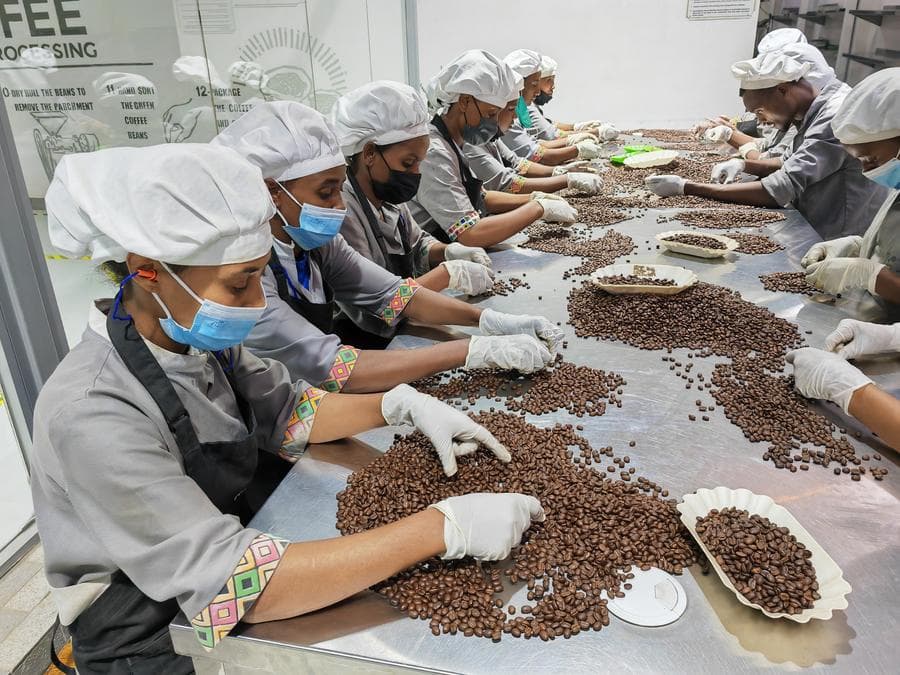
As global demand for specialty coffee continues to surge, Ethiopian coffee stands at the epicenter of unprecedented growth opportunities. For investors, importers, and stakeholders in the coffee industry, Ethiopian coffee production presents a unique convergence of heritage authenticity, quality excellence, and market expansion potential that is rarely found in today's competitive agricultural landscape.
This comprehensive analysis explores the strategic advantages, financial benefits, and long-term value proposition of investing in Ethiopian coffee production-from direct farm investments to supply chain partnerships and export relationships.
Market Insight: The global specialty coffee market is projected to reach $83.6 billion by 2030, with Ethiopian coffee capturing an increasing market share due to its unique terroir, heirloom varieties, and growing reputation among discerning consumers.
Why Ethiopia is the World's Premier Coffee Investment Destination
Ethiopia isn't just another coffee-producing country-it's the birthplace of Arabica coffee and home to the most genetically diverse coffee ecosystem on the planet. This foundational advantage creates investment opportunities that simply don't exist elsewhere.
1. Unmatched Genetic Diversity and Quality Potential
Ethiopian coffee's genetic diversity is its greatest asset. With thousands of indigenous heirloom varieties (landraces) that have evolved over millennia, Ethiopia produces coffees with flavor profiles that cannot be replicated anywhere else in the world.
- Natural differentiation: Each region-Yirgacheffe, Sidama, Guji, Harrar, Limu-produces distinctly different flavor profiles
- Premium positioning: Ethiopian coffees consistently command higher prices in specialty markets
- Climate resilience: Heirloom varieties show superior adaptation to climate variations
- Market exclusivity: True Ethiopian heirlooms cannot be grown with the same character outside Ethiopia
Investment Performance Indicators
- Price Premium: Ethiopian specialty coffee commands 30-50% price premiums over commodity coffee
- Market Growth: Ethiopian coffee exports increased by 45% between 2020-2025
- Yield Improvements: Modern farming techniques can increase yields by 200-300% while maintaining quality
- Global Demand: Demand for Ethiopian coffee growing at 8-12% annually in key markets
2. Government Support and Policy Improvements
The Ethiopian government has made coffee production a strategic priority, implementing reforms that make investment more attractive and commercially viable:
- Foreign investment incentives: Tax holidays, duty exemptions on machinery imports, and streamlined licensing
- Land lease programs: Long-term agricultural land leases available for commercial coffee farming
- ECX modernization: The Ethiopia Commodity Exchange provides market transparency and quality assurance
- Export infrastructure: Improved port access through Djibouti and expanded logistics networks
- Financial services: Growing access to agricultural credit and insurance products
3. Sustainable and Ethical Production Systems
Modern consumers and businesses increasingly prioritize sustainability. Ethiopian coffee production offers inherent advantages that align perfectly with ESG (Environmental, Social, and Governance) investment criteria:
- Shade-grown coffee: Most Ethiopian coffee grows under natural forest canopy, promoting biodiversity
- Organic by default: Many smallholder farms use minimal synthetic inputs, making organic certification achievable
- Social impact: Coffee supports livelihoods for over 15 million Ethiopians, creating measurable social returns
- Water-efficient processing: Traditional processing methods use less water than industrial approaches
- Carbon sequestration: Coffee forests serve as significant carbon sinks
ESG Advantage: Investments in Ethiopian coffee production easily qualify for sustainability-focused funds and impact investing portfolios, opening doors to specialized financing and premium valuations.
Financial Benefits and ROI Opportunities
Beyond the strategic positioning, Ethiopian coffee production offers compelling financial metrics that attract serious investors.
Multiple Revenue Streams and Value-Add Opportunities
Smart investors are finding profit at every stage of the coffee value chain:
Primary Revenue Models
- Green Coffee Export (Traditional Model)
- Direct sales to importers and roasters globally
- Margin: 15-25% depending on quality grade
- High volume, consistent demand
- Processing and Milling Services
- Wet mill operations for washed coffees
- Dry mill services for export preparation
- Value-add: 30-40% margin on processing fees
- Certified and Specialty Coffee Premium
- Organic certification: +20-35% premium
- Fair Trade certification: +15-25% premium
- Rainforest Alliance certification: +20-35% premium
- Specialty grade (85+ cupping score): +50-150% premium
- Direct Trade and Relationship Coffee
- Long-term contracts with premium roasters
- Price stability and predictable cash flow
- Premium pricing: +40-100% above commodity rates
- Roasted and Branded Products (Domestic Market)
- Ethiopia's domestic coffee consumption is growing rapidly
- Urban middle class demands premium roasted coffee
- Margin: 40-60% on retail roasted coffee
Cost Advantages in Ethiopian Coffee Production
Ethiopia offers several structural cost advantages that improve investment returns:
- Lower land costs: Agricultural land lease rates are significantly below comparable coffee-producing countries
- Abundant labor: Large agricultural workforce with traditional coffee knowledge
- Natural growing conditions: Ideal climate reduces need for irrigation and pest control inputs
- Established infrastructure: Existing processing stations, warehouses, and export channels reduce startup costs
- Currency dynamics: The Ethiopian Birr provides favorable exchange rate advantages for export-oriented businesses
Realistic Investment Returns and Timelines
While every investment carries unique circumstances, Ethiopian coffee production typically shows the following return profiles:
Farm-Level Investment
- Initial investment: $5,000-$15,000 per hectare
- Time to first harvest: 3-4 years
- Full production: 5-6 years
- Annual yield: 1,200-2,500 kg/hectare (green coffee)
- ROI: 20-35% annually once in full production
- Lifespan: 30-50+ years with proper management
Processing & Export Investment
- Initial investment: $150,000-$500,000+
- Time to operation: 6-12 months
- Revenue potential: Immediate upon sourcing
- Processing capacity: 50-500 tons per season
- ROI: 25-40% annually
- Scalability: High; can expand operations quickly
Market Dynamics Favoring Ethiopian Coffee
Several powerful market trends are converging to make this an ideal time for investing in Ethiopian coffee production.
Growing Global Demand for Specialty Coffee
The specialty coffee segment is experiencing explosive growth, and Ethiopian coffee is perfectly positioned to capture this demand:
- Third-wave coffee movement: Consumers increasingly seek origin-specific, traceable coffee
- Millennial and Gen Z preferences: Younger consumers willing to pay premiums for quality and story
- Home brewing expansion: COVID-19 permanently shifted coffee consumption toward premium home brewing
- Coffee shop proliferation: Specialty coffee shops are expanding in emerging markets across Asia, Middle East, and Africa
- Single-origin demand: Ethiopian coffee is one of the most recognized and demanded origins globally
Supply Constraints in Competing Origins
While demand grows, many traditional coffee-producing regions face challenges that create opportunities for Ethiopian production:
- Climate change impacts: Traditional growing regions in Brazil, Colombia, and Central America face increasing weather volatility
- Labor shortages: Many countries struggle with rural labor availability and rising wages
- Disease pressure: Coffee leaf rust and other diseases threaten production in many regions
- Land use competition: Coffee faces competition from more profitable crops in some countries
- Political instability: Production uncertainty in several major coffee-growing countries
Ethiopia's advantage: The country's highland climate, genetic diversity, and traditional farming systems provide resilience against many of these challenges.
Emerging Market Opportunities
New coffee markets are opening up rapidly, and Ethiopian coffee is exceptionally well-positioned to serve these growing consumer bases:
High-Growth Markets for Ethiopian Coffee
- China & Asia:Rapid coffee culture adoption; Ethiopian coffee viewed as premium and authentic
- Middle East:Cultural connections to coffee heritage; strong demand for specialty grades
- Africa:Growing middle class across continent; pan-African trade opportunities
- Eastern Europe:Emerging specialty coffee scenes seeking unique origins
- India:Large tea-drinking market transitioning to specialty coffee
Investment Entry Points and Strategies
Investors have multiple pathways to participate in Ethiopian coffee production, each with different risk profiles and capital requirements.
Strategy 1: Direct Farm Investment or Lease
Establishing or acquiring coffee farming operations provides the most direct exposure and highest potential returns.
Key Considerations:
- Capital requirement: Moderate to High ($200,000-$2M+)
- Time horizon: Long-term (5-20 years)
- Expertise required: Agricultural management, processing knowledge
- Risk level: Medium (agricultural risks, weather, market price)
- Control: High control over quality and operations
- Best for: Patient capital, experienced agricultural investors
Strategy 2: Export Company Partnership or Investment
Partnering with or investing in established Ethiopian coffee exporters provides immediate market access and operational expertise.
Key Considerations:
- Capital requirement: Medium ($50,000-$500,000)
- Time horizon: Medium-term (3-7 years)
- Expertise required: Coffee trading, international business
- Risk level: Medium-Low (operational experience reduces risk)
- Control: Shared control through partnership structures
- Best for: Importers, roasters, strategic coffee industry investors
Strategy 3: Processing Infrastructure Investment
Investing in washing stations, dry mills, and related processing infrastructure provides service-based revenue without direct farming exposure.
Key Considerations:
- Capital requirement: High ($300,000-$1M+)
- Time horizon: Medium-term (4-10 years)
- Expertise required: Processing technology, quality control
- Risk level: Medium (technology, market access)
- Control: High control over processing quality and capacity
- Best for: Infrastructure investors, technology providers
Strategy 4: Cooperative and Outgrower Financing
Providing financing, inputs, and technical assistance to smallholder cooperatives in exchange for exclusive or preferential purchasing rights.
Key Considerations:
- Capital requirement: Medium ($100,000-$500,000)
- Time horizon: Medium-term (3-7 years)
- Expertise required: Agricultural financing, cooperative management
- Risk level: Medium (repayment risk, side-selling)
- Control: Moderate control through contracts and agreements
- Best for: Impact investors, development finance institutions
Strategy 5: Direct Trade Relationship Establishment
For roasters and coffee companies, establishing direct trade relationships provides supply security and quality control without direct production investment.
Key Considerations:
- Capital requirement: Low to Medium ($20,000-$150,000 initial)
- Time horizon: Short to Medium-term (1-5 years)
- Expertise required: Coffee buying, quality assessment, relationship management
- Risk level: Low to Medium (supply consistency, quality variation)
- Control: Moderate through relationship and payment incentives
- Best for: Coffee roasters, importers, specialty coffee companies
Risk Factors and Mitigation Strategies
Like any investment, Ethiopian coffee production carries risks that must be understood and managed:
Primary Risk Factors
1. Political and Regulatory Risk
- Regional political dynamics can affect operations
- Export regulations may change
- Currency controls could impact repatriation
Mitigation: Work with established local partners, maintain proper licensing, diversify across regions, use forward contracts and hedging
2. Agricultural Risk
- Weather variability affects yields
- Pests and diseases can damage crops
- Frost or drought in highland areas
Mitigation: Geographic diversification, crop insurance, climate-adapted varieties, good agricultural practices, intercropping
3. Market Price Volatility
- Global coffee prices fluctuate significantly
- Currency exchange rate risks
- Specialty market premiums can vary
Mitigation: Forward contracts with buyers, futures market hedging, focus on specialty/quality premiums, diversify customer base
4. Operational and Logistics Challenges
- Infrastructure limitations in rural areas
- Skilled labor availability
- Export logistics and port congestion
Mitigation: Invest in local infrastructure, training programs, relationships with reliable logistics providers, container booking systems
5. Quality Consistency
- Maintaining consistency across seasons
- Processing quality control
- Post-harvest handling challenges
Mitigation: Standard operating procedures, quality control systems, staff training, modern processing equipment, proper storage
Success Stories: Real Investment Returns
While specific financial details are confidential, the Ethiopian coffee sector has numerous documented success stories:
- International roasters: Major specialty roasters have established direct relationships in Ethiopia, securing supply while supporting farmer development and achieving cost stability
- Processing investments: Modern washing stations in Sidama and Yirgacheffe have achieved full ROI within 4-6 years while improving farmer incomes by 25-40%
- Export partnerships: Joint ventures between international importers and Ethiopian exporters have grown volume by 300-500% over 5-year periods
- Cooperative financing: Outgrower financing programs have improved farmer yields by 150-200% while securing consistent supply for investors
- Farm rehabilitation: Investments in aging coffee farms have restored productivity to premium levels, generating 30%+ annual returns
Due Diligence Checklist for Potential Investors
Before committing capital to Ethiopian coffee production, conduct thorough due diligence:
Essential Investigation Areas
Legal and Regulatory
- Verify land tenure and lease agreements
- Confirm export licenses and ECX registration
- Review foreign investment regulations and tax treatment
- Understand repatriation rules for profits and capital
Operational Assessment
- Inspect coffee farm conditions and tree health
- Evaluate processing facilities and equipment
- Review historical production records and quality scores
- Assess management team experience and capability
Financial Analysis
- Review financial statements and audits (if available)
- Analyze historical pricing and margins
- Build realistic production and revenue models
- Understand cost structure and break-even analysis
Market and Commercial
- Verify existing customer relationships and contracts
- Assess market positioning and differentiation
- Review quality certifications (organic, Fair Trade, etc.)
- Understand competitive landscape and benchmarks
Social and Environmental
- Evaluate labor practices and community relations
- Assess environmental compliance and sustainability
- Review farmer payment systems and satisfaction
- Understand social impact metrics and ESG alignment
Working with the Right Partners
Success in Ethiopian coffee investment typically requires strong local partnerships. Key partner types include:
- Established exporters: Companies like Ethio Coffee Export PLC provide market access, regulatory expertise, and operational infrastructure
- Agricultural consultants: Local agronomists and coffee specialists ensure proper farming practices
- Legal advisors: Ethiopian business law firms navigate regulatory requirements
- Financial partners: Local banks and international development finance institutions provide capital and risk mitigation
- Certification bodies: Organizations that can help achieve organic, Fair Trade, or specialty certifications
- Quality labs: Cupping and testing facilities that ensure quality consistency
Partner Selection: Choose partners with demonstrated track records, transparent operations, and alignment with your investment goals. References from existing customers and site visits are essential.
The Long-Term Outlook: Why Now is the Time
Several factors make the current period particularly favorable for Ethiopian coffee investment:
- Modernization wave: Ethiopia is in the midst of agricultural modernization, creating opportunities to acquire assets at attractive valuations
- Infrastructure development: Major investments in roads, ports, and logistics are improving export efficiency
- Knowledge transfer: Increased international engagement brings best practices and technology to Ethiopian coffee
- Generation transition: Many coffee farms are transitioning to a new generation, creating partnership opportunities
- Market timing: Global supply constraints and growing demand create favorable pricing environment
- Early mover advantage: As premium coffee regions become more recognized, land and partnership costs will increase
Getting Started: Next Steps for Interested Investors
For investors ready to explore Ethiopian coffee production opportunities:
Recommended Action Plan
- Education phase (1-2 months): Research the market, understand the value chain, connect with experienced operators
- Network building (2-3 months): Attend coffee trade shows, join industry associations, establish relationships with Ethiopian coffee professionals
- Exploration visit (1 week): Visit Ethiopia during harvest season (October-January), tour farms and processing facilities, meet potential partners
- Due diligence (2-4 months): Conduct detailed assessment of specific opportunities, engage legal and financial advisors
- Pilot phase (1 year): Start with a smaller investment or test partnership to validate assumptions and build relationships
- Scale-up (Years 2-5): Expand based on pilot results, deepen partnerships, optimize operations
Conclusion: A Rare Convergence of Opportunity
Ethiopian coffee production represents a rare convergence of heritage authenticity, quality excellence, market dynamics, and investment fundamentals. As global demand for specialty coffee accelerates and consumers increasingly value origin stories and sustainability, Ethiopia's position as the birthplace of coffee becomes even more valuable.
For investors who approach the opportunity with patience, local partnerships, and commitment to quality, Ethiopian coffee production offers not just financial returns, but the chance to participate in one of the world's most storied agricultural traditions while supporting meaningful development in one of coffee's most important origins.
The question isn't whether to invest in Ethiopian coffee-it's how to structure that investment for maximum impact and returns.
Ready to explore Ethiopian coffee? Contact our team to discuss partnership models or sourcing relationships that align with your strategic goals.