COFFEE IS AGRICULTURE: THE COMPLETE GUIDE TO COFFEE PRODUCTION AND FARMING
Understanding the science, art, and challenges of growing coffee from seed to harvest
Aug 01, 2025
Introduction: Coffee Begins on the Farm
Welcome to the second part of our "Coffee Is" series, where we explore coffee through different lenses. This chapter focuses on coffee as agriculture a complex system shaped by science, tradition, ecology, and economics.
For background on the plant itself, see Coffee is a Plant. If you're evaluating origin lots, pair this farming overview with our Practical Guide to Ethiopian Green Coffee Origins and our sourcing guide How to Source Green Coffee from Ethiopia.
For roasters, baristas, and coffee enthusiasts alike, understanding how coffee is grown adds essential context to what ends up in the cup. Every flavor note begins long before roasting deep in the soil, under shade trees, in the hands of farmers.
What Does Agriculture Mean in Coffee?
Webster's Dictionary defines agriculture as "the science, art, or practice of cultivating soil, producing crops, and raising livestock." Coffee fits this definition perfectly.
Coffee agriculture is:
- A science: soil chemistry, plant biology, pest management, and climate interaction
- An art: intuition, generational knowledge, and reading the land
- A business: production, processing, and global trade
In specialty coffee, producers constantly balance quality, sustainability, and long-term farm health. In Ethiopia the birthplace of Arabica traditional systems like forest and garden coffee reflect centuries of agricultural wisdom rooted in biodiversity and resilience.
What makes Ethiopian coffee agriculture unique is its integration with natural ecosystems. While coffee in Brazil or Vietnam often grows in full-sun monocultures, Ethiopian coffee typically thrives under canopies of native shade trees - a practice that predates modern "sustainable agriculture" by millennia. This traditional approach creates coffees with distinctive complexity: the same heirloom varieties grown in Guji versus Yirgacheffe or Sidamo taste dramatically different because of variations in soil, shade, altitude, and microclimate. Agriculture doesn't just produce coffee - it shapes its character.
A Brief History of Agriculture and Coffee
Human agriculture began over 12,000 years ago, evolving from controlled burning and foraging into structured farming systems. Major turning points include:
- The British Agricultural Revolution (1500s): Global crop exchange and commercialization
- The Green Revolution (1950s): Synthetic fertilizers, pesticides, and monoculture farming
Coffee followed a similar trajectory. Originating in Ethiopia, it spread to Yemen in the 6th century, Indonesia by 1690, and the Americas by the 1700s.
Today, climate change is forcing a return to polyculture and agroforestry, as monoculture systems prove fragile under rising temperatures and erratic rainfall.
Global Coffee Production Today
Coffee is now one of the world's most important agricultural commodities:
- 10.5 million metric tons produced annually
- 60% grown by smallholder farmers (under 5 hectares)
- Ethiopia accounts for nearly half of Africa's smallholder coffee production
While specialty coffee represents only ~5% of global volume, it's growing rapidly projected to reach 10% by 2028. The specialty coffee trends shaping 2026 point toward increasing demand for traceability, experimental processing, and direct origin relationships - all areas where Ethiopian coffee excels.
Yet the economics remain stark:
- 44% of smallholders live below the international poverty line
- Many earn less than $100 per year from coffee
This disconnect highlights why understanding coffee as agriculture not just a beverage is essential. When you understand what farmers invest - years of labor, generations of knowledge, constant climate adaptation - the price per pound takes on new meaning. Direct trade partnerships that prioritize farmer welfare become not just ethically preferable but strategically vital for securing quality supply chains.
The Coffee Farming Ecosystem
Soil: The Foundation of Quality
Healthy coffee starts with healthy soil. Ideal coffee soils are loamy, balancing:
- Sand for drainage
- Silt for water retention
- Clay for nutrient storage
Key nutrients include:
- Macronutrients: Nitrogen (N), Phosphorus (P), Potassium (K)
- Secondary nutrients: Calcium, Magnesium, Sulfur
- Micronutrients: Iron, Zinc, Boron
Optimal soil pH ranges from 5.5 to 6.5, allowing efficient nutrient uptake.
Crucially, soil is alive. Microorganisms break down organic matter and unlock nutrients without them, coffee plants cannot thrive.
Ethiopia's coffee-growing regions benefit from ancient volcanic soils rich in minerals and organic matter. The red lateritic soils of Sidamo, the dark volcanic earth of Guji, the loamy highland soils of Yirgacheffe - each contributes distinct mineral signatures that influence cup character. When specialty buyers talk about "terroir," soil is the foundation. The same heirloom variety planted in different Ethiopian soils will produce noticeably different chemical compounds and flavor profiles - a phenomenon that our origins guide explores in depth.
Encouraging Soil Life
Modern coffee agriculture increasingly prioritizes soil biology through practices such as:
- Composting organic waste
- Culturing microbes to multiply beneficial microorganisms
- Mulching with plant material to feed microbes
- Intercropping for biodiversity
Producers in Ethiopia and Colombia often say: "Everything the plant needs already exists on the farm we just need to unlock it."
The Life Cycle of the Coffee Plant
Germination & Nursery
Coffee production starts with seeds. After harvesting, seeds are tested for moisture content (they need at least 20% to germinate) and soaked overnight. They're planted in raised nursery beds with a mix of sand and peat for excellent drainage and aeration.
Germination takes about a week: the root emerges first, followed by the shoot pushing upward. Within two weeks, the first true leaves (cotyledons) appear. Seedlings spend 9 months in the nursery, developing 9-12 leaf pairs before transplanting. During this time, they're kept shaded and watered regularly, with constant monitoring for pests and diseases.
Transplanting & Early Growth
Transplanting happens at the start of the rainy season. Farmers:
- Prepare soil with organic matter
- Mulch to retain moisture
- Gradually reduce shade
Coffee plants take 2-3 years to produce fruit. Early harvests are small, but yields increase as plants mature.
Flowering, Fruiting & Harvest
Flowering follows dry-season stress. Blooms last 3-4 days, attracting pollinators. While Arabica self-pollinates, cross-pollination improves yield and resilience.
Fruit development takes ~8 months, transitioning from green to deep red-purple. Specialty coffee relies on selective hand-picking, often across multiple harvest passes.
Annual Coffee Farm Management
Key yearly tasks include:
- Post-harvest pruning to remove unproductive growth
- Fertilization with NPK and organic amendments during wet seasons
- Weed control to manage competition
- Organic pest and disease management using beneficial insects and copper fungicides
- Shade regulation and facility maintenance
Coffee Farming Systems
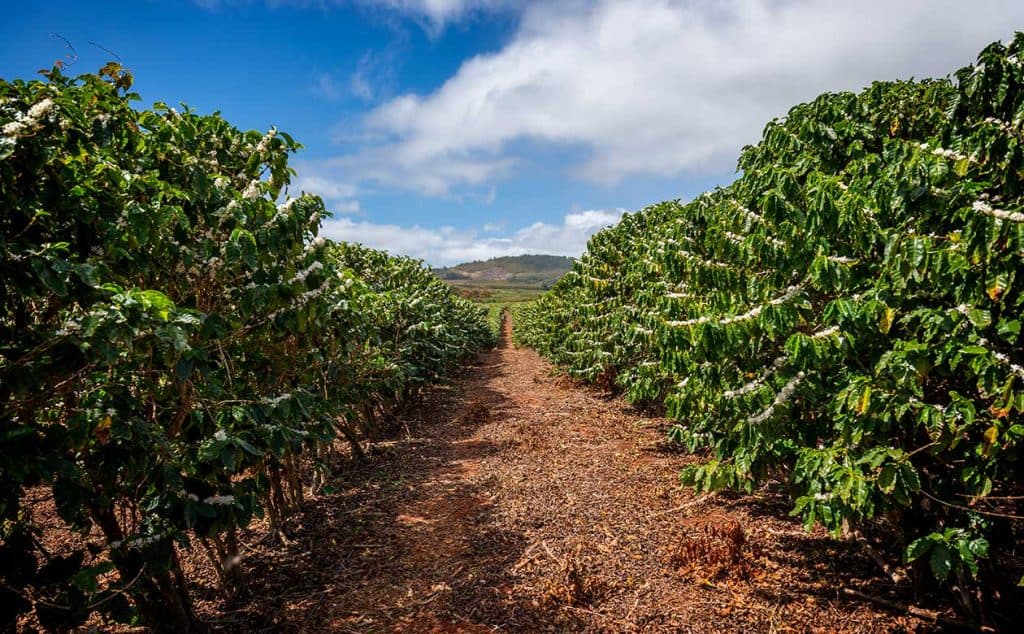
Coffee farming systems range from rustic polyculture (integrating with natural forests) to unshaded monoculture plantations. Shaded systems common in Ethiopia provide biodiversity, erosion control, and climate resilience. Polyculture, growing coffee with other crops, is gaining traction against climate change, offering economic diversification and ecological benefits.
Agroforestry intentional tree integration offers ecological services like carbon sequestration and wildlife habitat while providing economic diversification through timber and other products.
In Ethiopia, four distinct farming systems produce the coffee that reaches international markets:
- Forest coffee: Wild or semi-wild coffee growing in natural forest understory - the most "natural" system, producing about 10% of Ethiopia's crop with exceptional genetic diversity
- Semi-forest coffee: Forests managed for coffee production with selective thinning - balances wildness with improved yields
- Garden coffee: Smallholder plots around homesteads, often intercropped with food crops - represents the majority of Ethiopian production
- Plantation coffee: Larger-scale commercial operations with more intensive management - a minority of Ethiopian production
These systems directly influence post-harvest processing options. Forest and garden coffees often go through community washing stations, while plantation coffees may have dedicated processing infrastructure. Understanding the farming system helps buyers anticipate lot sizes, consistency, and traceability possibilities.
Environmental Pressures on Coffee
Climate change poses the greatest threat to coffee. Rising temperatures and erratic rains could reduce suitable growing land by up to 50% by 2050. Pests like coffee leaf rust thrive in stressed environments, spreading rapidly.
Ethiopia's polyculture traditions provide resilience, but global coffee production needs systemic changes. Supporting smallholders through fair pricing, sustainable practices, and innovation is crucial for the industry's future.
Conclusion: Why Coffee Agriculture Matters
Coffee is not just a drink it's agriculture shaped by science, tradition, and human labor. Understanding how coffee is grown deepens respect for producers and reinforces the importance of ethical sourcing and sustainable practices.
At Ethio Coffee, we work directly with Ethiopian farmers to honor this agricultural heritage and deliver exceptional coffee to roasters worldwide.
The next time you cup an Ethiopian lot, consider what went into it: generations of farmer knowledge, complex soil ecosystems, careful shade management, selective hand-picking at peak ripeness. The bright acidity of a washed Yirgacheffe reflects high-altitude growing conditions and careful cherry selection. The wild fruit notes of a Guji natural emerge from fermentation that began in the field, under the shade of native trees, in soil enriched by centuries of forest ecology.
Continue Your Coffee Education
Now that you understand coffee as agriculture, explore what happens after harvest:
- Coffee Is Processing - How cherries become green beans through fermentation, drying, and milling
- Coffee Is Commerce - The logistics and economics of moving coffee from farm to roastery
- Washed vs Natural Processing - How different post-harvest methods create different cup profiles
Ready to source speciality Ethiopian coffee? Contact us to learn about our direct trade partnerships and how we support sustainable agriculture.
References & Further Reading: This article draws from educational materials developed by Café Imports, World Coffee Research variety catalog, UC Davis Coffee Center research, and various genetic studies on Coffea arabica phylogenetics.